


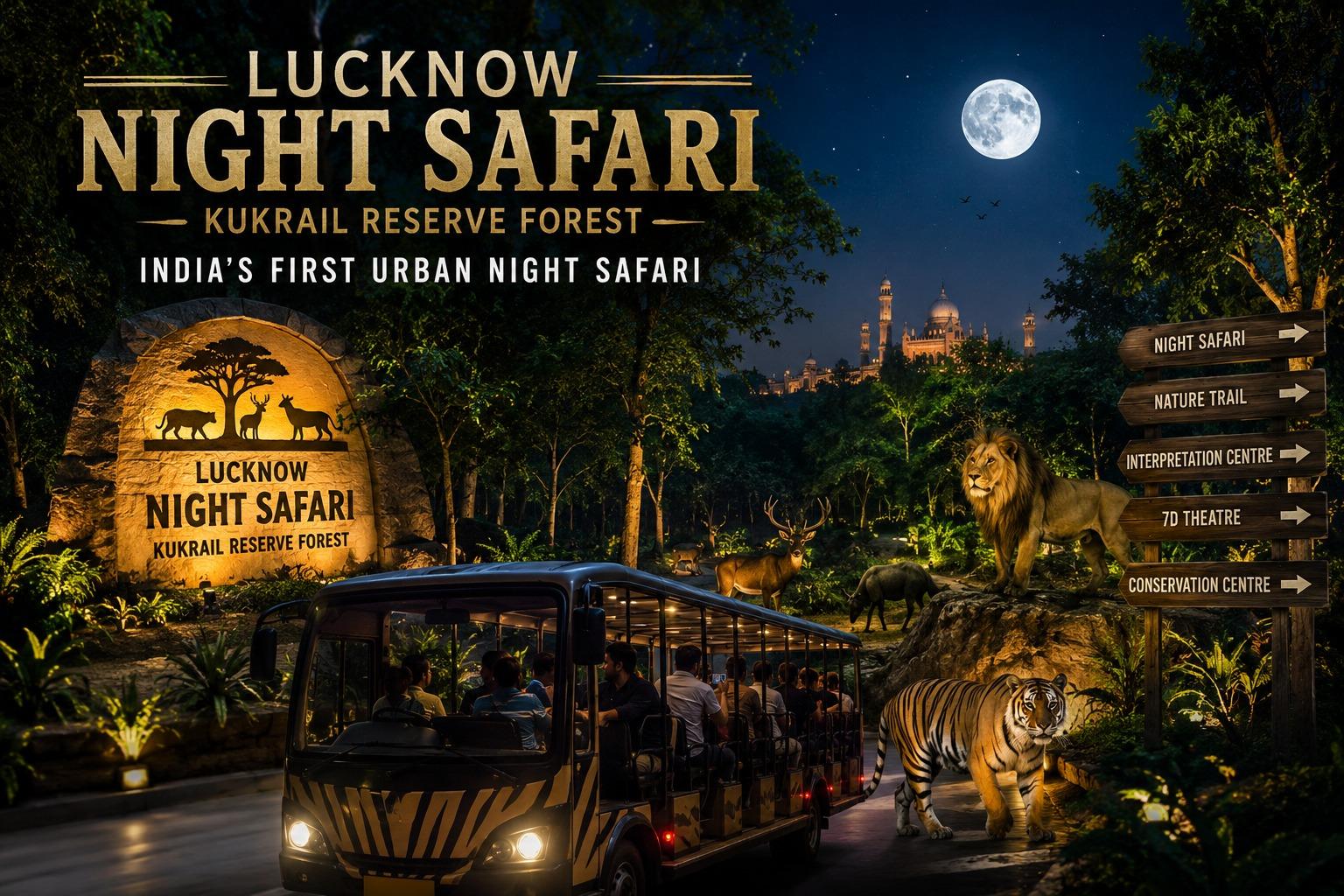

This wildlife-related project will be unique of its kind in India.
It will positively impact the economic structure of Lucknow and the surrounding areas.
Environment Pulse Desk
Famed for its royal heritage, architectural masterpieces, and prosperous culinary tradition, Lucknow is making ready to unveil a totally new chapter in its tourism story. The metropolis is crafting the Kukrail Night Safari—India’s very first city nocturnal natural world park. The assignment seamlessly blends flora and fauna conservation with sustainable travel, promising an immersive night trip in contrast to something else in the country.
Spanning roughly 855 acres inside the Kukrail Reserve Forest, this formidable mission backed with the aid of a funding of almost ₹1,500 crore is shifting ahead in structured phases with full environmental clearances. The first section focuses on launching the night time safari alongside core eco-tourism infrastructure, whilst later phases will introduce a modern-day zoological park—transforming the reserve into one of Northern India’s greatest flora and fauna hubs.
Inspired via world-renowned nocturnal sanctuaries, the facility will supply site visitors a uncommon glimpse into the dead night routines of over a hundred species, along with Asiatic lions, Bengal tigers, leopards, hyenas, flying squirrels, and gharials. Guided excursions will run on quiet electric powered trams for about forty minutes, touring alongside paths illuminated with the aid of subtle, moon-mimicking lights engineered to defend animal sleep cycles and behavior. Beyond the safari route, visitors can seem to be ahead to nature trails, interactive instructional centers, lookup zones, and family-friendly aspects like a 7D theatre. City planners anticipate to welcome up to 4,000 site visitors on weekdays and up to 8,000 all through weekends and height holidays.
Strategic Location & Economic Impact
One of the project’s largest blessings is its sheer accessibility. Situated proper on Lucknow’s doorstep, Kukrail gives rapid tour instances from Chaudhary Charan Singh International Airport and the city’s principal railway stations. Unlike far off desolate tract reserves that demand lengthy street journeys and multi-day stays, this city safari makes natural world viewing trouble-free for nearby families, weekend ruin seekers, students, and global travelers alike.
This handy proximity is set to seriously change Lucknow’s nearby economy:
Extended Tourist Stays: Visitors can discover iconic historical spots like the Bara Imambara, Rumi Darwaza, and the Residency at some point of the day, then cap off their day trip with an night safari—encouraging longer inn stays and greater nearby spending.
Broader Audience Appeal: The enchantment positions Lucknow as a pioneer in cutting-edge eco-tourism, drawing flora and fauna photograhers, instructional tours, and conservation-focused travelers.
Direct & Indirect Employment: New job possibilities will span animal care, sanctuary operations, tour guiding, hospitality, transport, and facility upkeep.
Boost for Local Businesses: Nearby hotels, home-stays, eateries, handicraft markets, and cab offerings stand to obtain considerably from extended foot traffic.
Built on Conservation & Sustainability
Importantly, this contemporary improvement respects the area’s current legacy. The venture is designed to combine with and assist the ancient Kukrail Gharial Rehabilitation Centre, which has performed a critical position in breeding and releasing endangered gharials for decades. Research, species recovery, and environmental schooling will stay core priorities alternatively than being sidelined for entertainment.
Operating inside a touchy wooded area region needs strict eco-friendly management. Success depends closely on managed lighting, clever waste systems, strict traveller limits, and non-stop habitat monitoring. If performed with a authentic dedication to ecological integrity, the Kukrail Night Safari will no longer solely redefine Uttar Pradesh’s tourism landscape—joining non secular and cultural hotspots like Ayodhya, Varanasi, and Agra—but additionally set up a main blueprint for city eco-tourism throughout India.


