

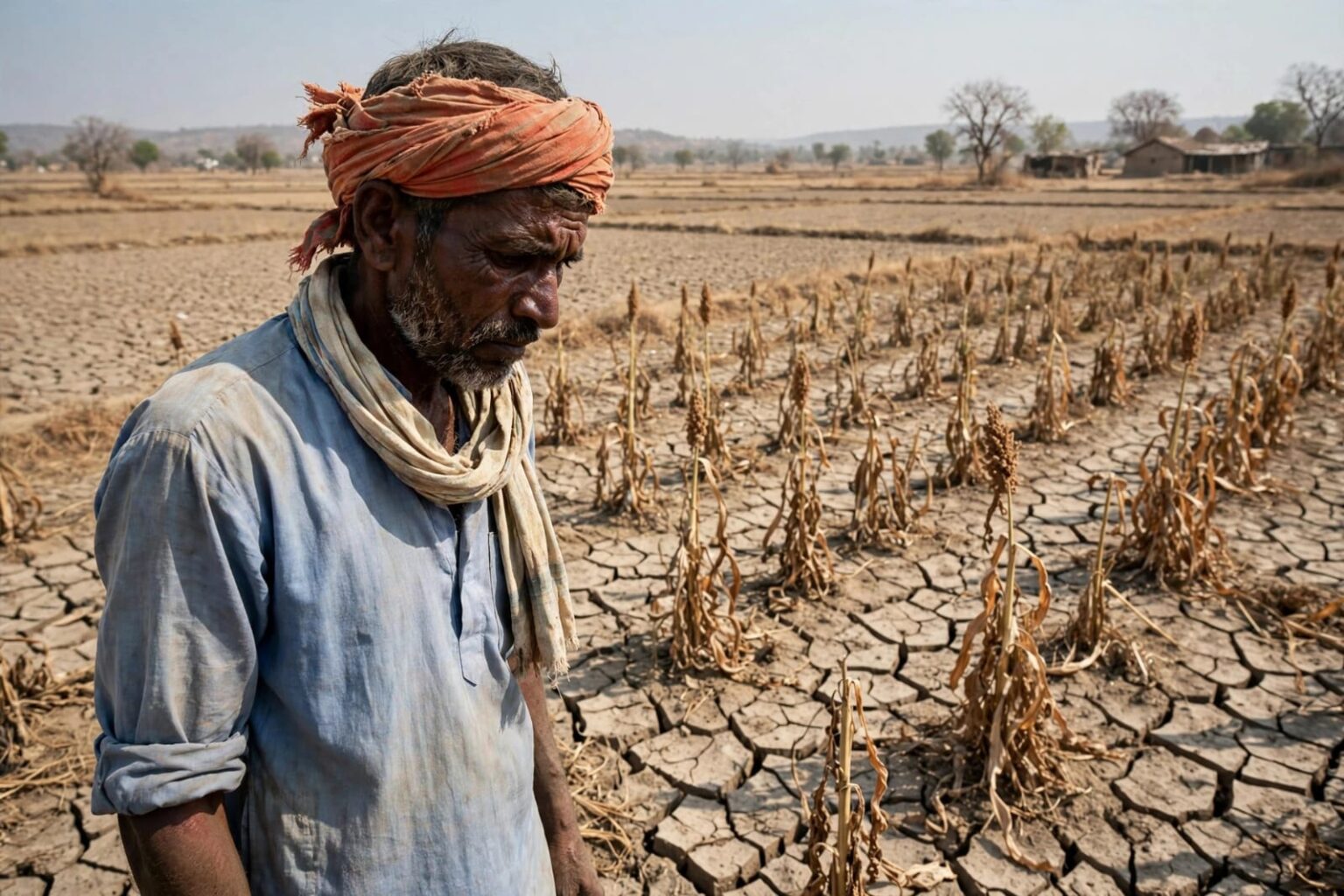

Climate change is significantly disrupting agricultural practices worldwide by making weather patterns increasingly unpredictable. Farmers are facing severe challenges, including erratic rainfall leading to droughts or floods, rising temperatures and intense heat waves that damage crops and stress livestock, shifting growing seasons, and water scarcity driven by melting glaciers and increased evaporation. Additionally, warmer conditions have increased the proliferation of pests and crop diseases, while extreme weather events can devastate yields and livestock in a single day.
Environment Pulse Desk: Climate change is making farming harder and much less predictable in large swathes of the world. With farmers so dependent on stable temperatures, predictable rainfall and normal seasons, even small changes in weather patterns can impact crops, livestock and people enterprise earnings.
Unpredictable rainfall
You are left with rain coming too late, or too early, or so intense but in paltry amounts and abnormally short wired doses rather than steady spells. This causes drought on one end, flooding the other, and makes it a lot more difficult to know when to sow or harvest.
Rising heat
Increased occurrence of heat waves reduces crop yield, injures fruits as well as vegetables, enhances water requirements, and endangers livestock through heat stress.
Shifting growing seasons
Changing climate is timing when crops flower, get planted and harvested. Some crops that were previously ideal for a region may no longer be so as conditions change.
More pests and disease
So this higher temperature means that various insects, weeds and crop assassins live on where cold managed to repress them.
Water scarcity
As temperatures warm, evaporation increases and together with changing rainfall patterns and reduced snow or glacier reserves is making irrigation increasingly difficult in many regions.
Extreme weather events
On the other hand, storms, floods and droughts or rain out of season can devastate crops and loss of livestock, barns and stored produce in almost a single day.
Livestock stress
It affects animals’ feed intake, slow their growth and milk yield, and reproduction, as well as making water and fodder scarcer
Rising costs, growing uncertainty
As unpredictable yields make income less predictable, farmers are paying more for irrigation, cooling, pest control and insurance.
Adapting crop choices
In response, many farmers are adopting drought-tolerant and heat-resistant crops or shorter-duration varieties that can be planted earlier or later in the season depending on changing conditions.
But not every farming community feels it the same way — impact is heavily conditional on geography, crop, irrigation and technology access, credit availability, weather forecasting and government support.
Also Read: Domestic Greenery adds to the environment