


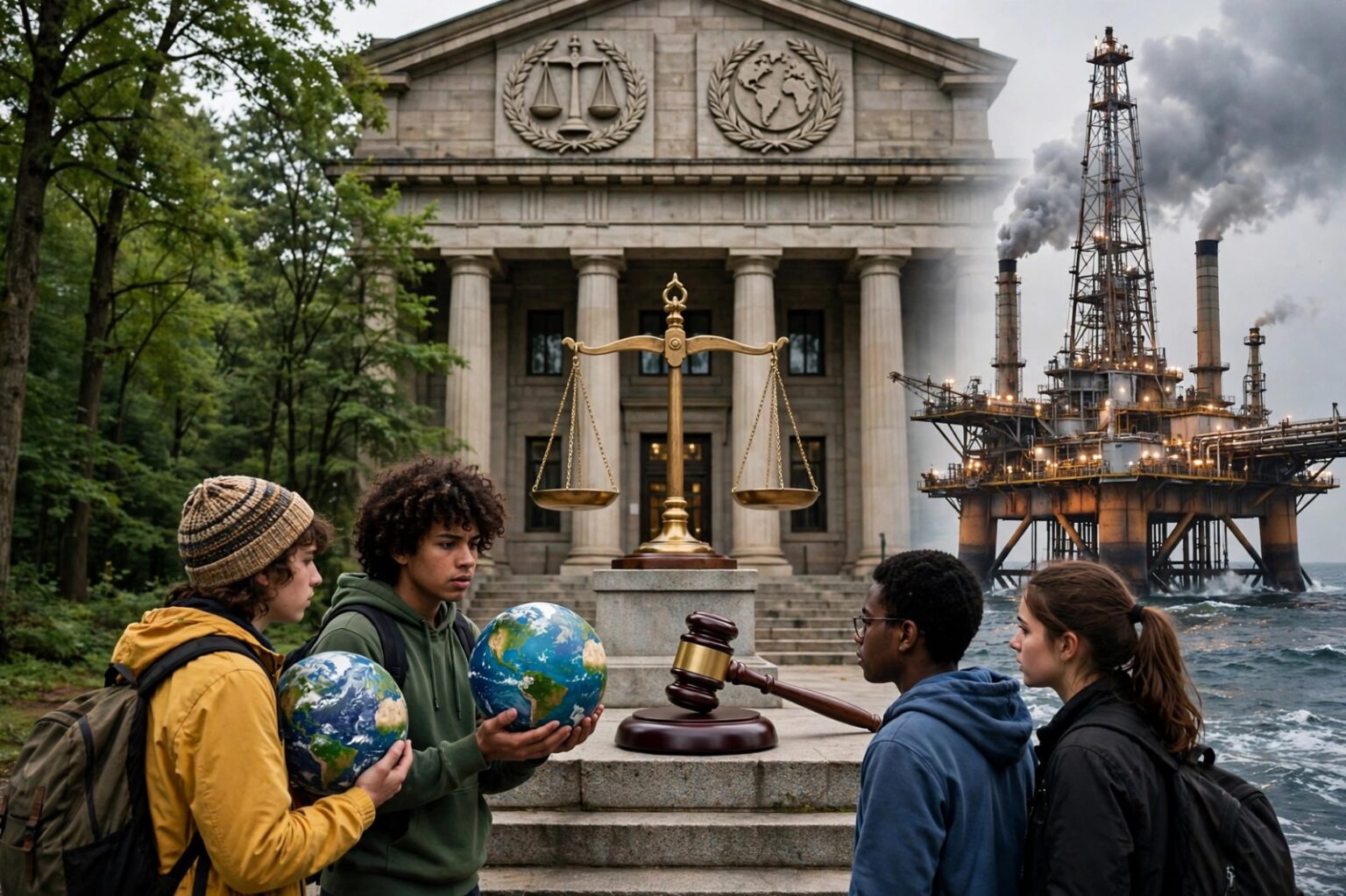

Global climate litigation has surged past 3,099 cases, driven by landmark advisory opinions from the IACtHR and the ICJ that link climate protection to fundamental human rights. With cases spanning 55 national jurisdictions and growing activity in the Global South, courts are increasingly holding governments and corporations legally accountable for emissions, climate risks, and adaptation failures.
Environment Pulse Desk: The first advisory opinion, issued by the Inter-American Court of Human Rights, defines what states must do to address the impacts of climate change on individuals and communities. The second advisory opinion, issued by the International Court of Justice, outlines how governments around the world should respond to the global threat posed by climate change. As of the end of 2025, there are over 3,099 climate-related lawsuits filed globally. These lawsuits follow the issuance of these two important advisory opinions.
The Global Climate Litigation Report 2025, developed through a partnership between the United Nations Environment Program (UNEP) and Columbia University Law School’s Sabin Center for Climate Change Law, reports that there were 55 national jurisdictions and 24 international/regional courts, tribunals and/or quasi-judicial bodies involved with litigation. There was a dramatic increase from 884 cases in 2017 to 1,550 cases in 2020 and approximately 2,180 cases by 2022. The United States continues to lead in case volume with somewhere between 1,936 to 1,986 cases filed as of late 2022. In contrast, the remaining cases were filed throughout the rest of the world. Additionally, litigation activity is increasing within the Global South where there are currently 305 active cases. Other countries that have experienced large volumes of litigation include Australia, Brazil, the United Kingdom, and Germany.
The role of civil society has been significant in this process. One example of a civil society organization is the Interamerican Association for Environmental Defense (AIDA). AIDA has been tracking and supporting cases throughout Latin America and the Caribbean, which in turn has provided data to the regional database used to create the global count. This demonstrates that organizations other than governments are developing more sophisticated legal tactics against governments as well as corporations.
Two opinions that changed the conversation
In its Advisory Opinion OC-32/25, the IACtHR confirmed that the right to have a healthy environment and in particular a healthy climate is protected by the American Convention on Human Rights. It also stated that the right to a healthy climate is related to other rights such as life, health, water, food, housing and a dignified existence. Finally, the IACtHR acknowledged that there are obligations on both states and companies.
On the heels of that decision, the ICJ provided its advisory opinion on what each country should be doing to address climate change. In an unanimous opinion, the Court stated that all countries are bound by international law, including human rights law and climate treaties, to take action to stop climate damage, regulate GHG emissions, increase carbon sinks, and help those countries most at risk. While advisory opinions do not create legally enforceable obligations, they provide significant weight when used as evidence or referenced in other decisions made by domestic courts. Many additional lawsuits are likely to be filed.
A widening range of cases
Today’s cases represent a wide variety of issues: challenging emissions reduction targets; failing to adapt; developing new fossil fuel projects; corporate greenwashing; assessing climate related financial risks; and seeking damages from climate change. Those who file lawsuits include NGOs, individuals, youth organizations, and now also government entities. Cases in the Global South typically address human rights violations and losses/damages, whereas cases in the Global North typically focus on holding corporations accountable and enforcing existing laws.
The rates of success vary, but according to experts, the sheer number of lawsuits being filed is currently changing how government policies operate. Courts are increasingly recognizing climate change actions as legal obligations rather than as political choices; and the new court decisions provide advocates with the ability to show that a failure to take action on climate change may be a violation of people’s basic rights.
As the world gets warmer and we experience more severe weather conditions, the courts are becoming a major place where people can go to try and get some type of climate justice. There have been over 3,099 lawsuits brought forward so far and there are many more to come. It does not appear that the trend toward increased use of the court system will slow down. In the next few years we will see if the successes in the court translate into stronger policies, lower greenhouse gases, and holding those who caused the problem accountable.
Also Read: India Emerges as a Major Global Carbon Sink