

The “Green Campus” movement in Lucknow and across Uttar Pradesh has gained remarkable momentum, driven by large-scale initiatives like the Van Mahotsav plantation drive—which aimed to plant 20 million saplings in July 2026—and strict campus sustainability mandates, including single-use plastic bans and waste management. Educational institutions are integrating environmental action with education, highlighted by the launch of Uttar Pradesh’s first Green Skills & Applied AI Center at the University of Lucknow in partnership with the 1M1B Foundation, Microsoft, and MeitY. Together with solar energy adoption, formal green campus policies at universities like IIM Lucknow, and citywide urban greening efforts, these initiatives are transforming local institutions into active pillars of the region’s broader environmental and clean-air movement.
Environment Pulse Desk: In recent times, Green campuses have emerged as one of the biggest talking points in Lucknow and aspirant districts across Uttar Pradesh – launched by large scale tree plantation drives; sustainability mandates at colleges & Universities coupled with new skill-training centres based on Clean Energy; Citywide greening initiatives.
A Statewide Effort to Make Schools More Green
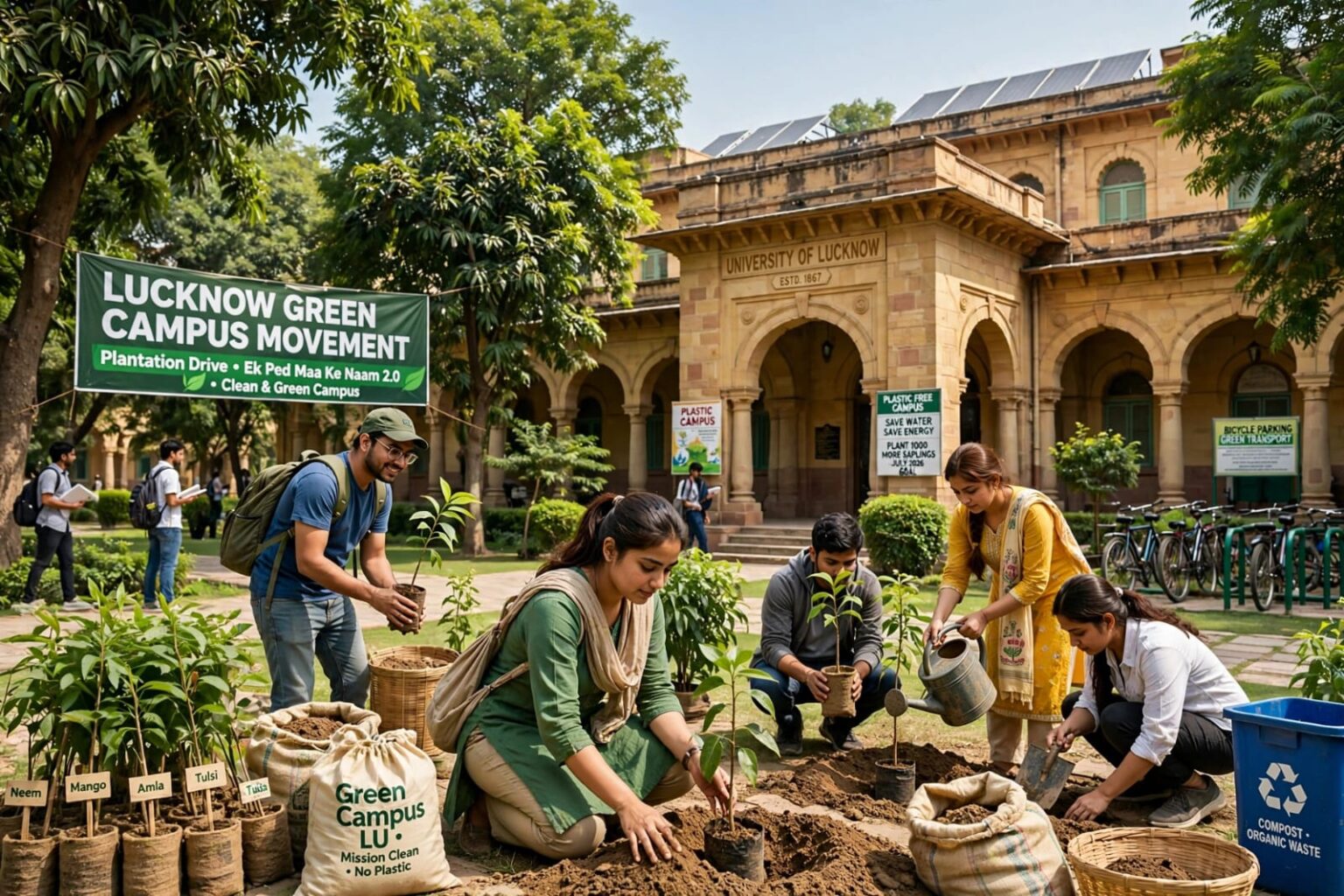
In July 2026, UP Higher Education Department had directed universities and degree colleges in all over the state to plant as many saplings –20 lakh (2 million) plants on Van Mahotsav-2026. The state observed tree plantation festival of Van Mahotsava on July 12. It ended up being a mammoth undertaking — 22 of the state universities, and also 53 private ones as well as around almost 8 thousand degree colleges were all taken aboard in this initiative. The colleges were also instructed to plant tree boundaries wherever absent and dedicate sapling in the name of Mother under, Ek Ped Maa Ke Naam (One Tree In Mama Name) campaign.
The institutions of Lucknow had already been on this front. Some of the other colleges included National PG College, which also planted saplings as part of tree plantation drives at their campuses, while around hundreds (mainly fruit-bearing)/ornamental/medicinal Sapling plants were planted in Lucknow University campus on Wednesday; more plantations are planned.
Initiatives with A Difference from Lucknow
Green Skill Development Center: University of Lucknow along with 1M1B Foundation, Microsoft and MeitY Startup Hub Mentors and State Government launched Uttar Pradesh’s First Centre for Green Skills & Applied AI- July 2026. The centre provides training in applied AI, solar, electric vehicles, wind energy and climate technologies. In its first year itself, it plans to coach greater than 5,000 youngsters in the direction of a national goal of coaching one lakh youth by way of 2030.
Ban on plastic: The governor had directed universities to stop single-use plastics and use environment-friendly options such as earthen kulhads and jute bags, proper segregation of waste, along with cleanliness drives once a week. Plastic & tobacco ban≠ Lucknow University has already implemented.
Formal Green Policies: With the advent of technology and with references from best practices around green campus policies, institutions like Khwaja Moinuddin Chishti Language University is now taking steps to frame their own Green Campus Policy covering eco-friendly practices, decongestion through less vehicular movement and optimal renewable energy harnessing. Others like IIM Lucknow and Shri Ramswaroop Memorial University have implemented solar installations, biodiversity conservation projects and carbon sequestration efforts on their campuses.
In fact schools in UP have also regularly receiving national recognition through the Swachh Evam Harit Vidyalaya Rating, where cleanliness and green infrastructure are rewarded.
Part of a Bigger Picture
None of this is an isolated development — it’s linked to Lucknow’s large-scale environmental transformation which comprises Miyawaki forest plantations, vertical gardens new biodiversity parks and blue-green corridors along the Gomti riverfront. These collective efforts have resulted in improving Lucknow’s position as moved up the various leagues of clean-air surveys.
In short, the “green campus” slog in Lucknow is really three things going on at once: rampant tree planting beyond compare; assiduous day-to-day sustainability practices (plastic bans, better waste and energy management); and a genuine effort to cultivate green-economy skills among students. Combined, they are making the city’s schools a visible face of its sustainability movement with both an element that regularly pops up in local news and policy discussions.
Also Read: Has India Really Cleaned Up the Ganga?