

By using this site, you agree to the Privacy Policy and Terms of Use.
Accept
Environment PulseEnvironment PulseEnvironment Pulse
Notification Show More
Font ResizerAa
  • ईको सिस्टम
    • जल
    • जंगल
    • जमीन
    • हवा
    • खनिज
    • जैव-विविधता
    • गतिविधियां
  • कचरा-प्रबंधन
    • ग्रीन बिजनेस
    • रीसाइकलिंग
    • इन्नोवेशन
    • इनिशिएटिव्स
  • फ्यूचर ग्रीन
    • ऊर्जा
    • सस्टेनिबिलिटी
    • इलेक्ट्रिक व्हीकल
    • कृषि एवं खाद्य
  • ओपिनियन
    • विचार
    • इम्पैक्ट फीचर
    • स्टोरी
  • मल्टीमीडिया
    • वीडियो
Reading: The Cuttlefish Didn’t Show Up. Now Scientists Are Scrambling to Understand Why
Share
Font ResizerAa
Environment PulseEnvironment Pulse
  • ईको सिस्टम
  • कचरा-प्रबंधन
  • फ्यूचर ग्रीन
  • ओपिनियन
  • मल्टीमीडिया
Search
  • ईको सिस्टम
    • जल
    • जंगल
    • जमीन
    • हवा
    • खनिज
    • जैव-विविधता
    • गतिविधियां
  • कचरा-प्रबंधन
    • ग्रीन बिजनेस
    • रीसाइकलिंग
    • इन्नोवेशन
    • इनिशिएटिव्स
  • फ्यूचर ग्रीन
    • ऊर्जा
    • सस्टेनिबिलिटी
    • इलेक्ट्रिक व्हीकल
    • कृषि एवं खाद्य
  • ओपिनियन
    • विचार
    • इम्पैक्ट फीचर
    • स्टोरी
  • मल्टीमीडिया
    • वीडियो
Have an existing account? Sign In
Follow US
Environment Pulse > ईको सिस्टम > जल > The Cuttlefish Didn’t Show Up. Now Scientists Are Scrambling to Understand Why
AI Image
जल

The Cuttlefish Didn’t Show Up. Now Scientists Are Scrambling to Understand Why

Environment Pulse
Last updated: September 5, 2026 9:22 pm
Environment Pulse
Published: September 5, 2026
Share
AI Image
SHARE

The annual mass aggregation of giant Australian cuttlefish in South Australia’s Upper Spencer Gulf experienced a catastrophic collapse this year, with official surveys counting just 1,811 cuttlefish—a 97% drop from last year and the lowest number ever recorded.

Contents
This year, almost none of them came.“Something We Haven’t Seen Before”A Season CancelledWhy Every Season CountsAlso Read: Beekeepers Sound the Alarm as Asian Hornets Turn UK Gardens Into “Pollinator Deserts”

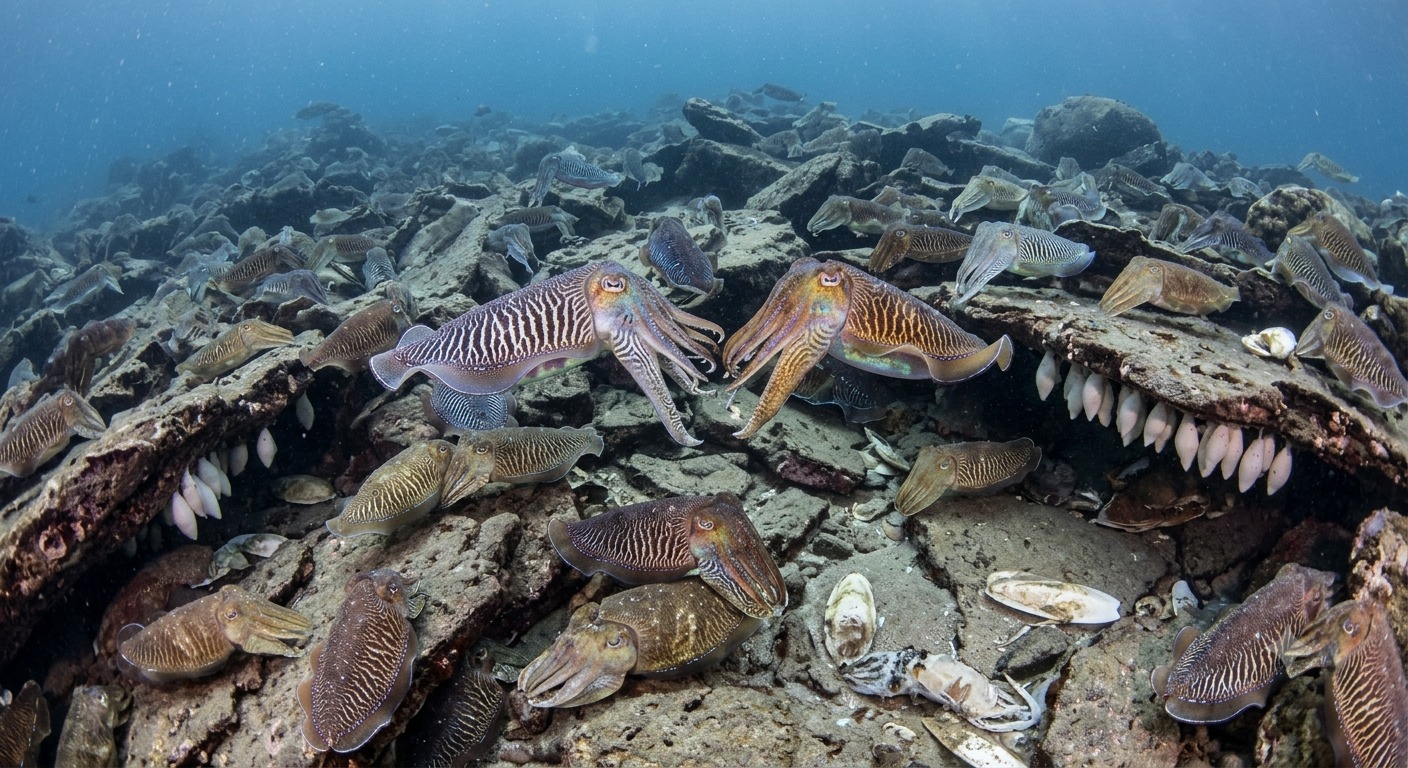
Environment Pulse Desk: Every winter for decades, one of the strangest and most beautiful natural spectacles on Earth has played out in the shallow waters of the Upper Spencer Gulf. Tens of thousands of giant Australian cuttlefish — sometimes as many as 200,000 — converge on the rocky reefs off Whyalla to mate, turning the seafloor into a shifting canvas of colour as the animals flash and pulse their way through courtship. It’s a phenomenon found nowhere else on the planet, and it draws divers from every corner of the globe.

This year, almost none of them came.

Official surveys this season counted just 1,811 cuttlefish along the aptly named Cuttlefish Coast — a 97% collapse from the roughly 63,000 seen last year, and the lowest number ever recorded. Fewer than a few hundred eggs have turned up so far, in a place that normally hosts millions.

“Something We Haven’t Seen Before”

Researchers are still piecing together what went wrong, but the leading theory points to the ocean itself. South Australia’s coastline has been gripped by a toxic algal bloom for more than a year and a half now, and scientists suspect it’s playing a major role in the crash. Unusually warm water earlier in the season may have compounded the problem, potentially scrambling the migration and breeding signals the cuttlefish rely on.

“This is something we haven’t seen before,” says Associate Professor Zoe Doubleday, a marine ecologist at the University of Adelaide who has studied the aggregation for years.

The scale of the absence has stunned even people who know these reefs intimately. Local dive operators describe stretches of seafloor that should be alive with colour and movement now sitting almost silent — divers combing wide areas and turning up fewer than 50 animals in total.

A Season Cancelled

The human toll has been immediate. Tourism operators scrapped the entire 2026 season outright. One of Whyalla’s biggest dive operators turned away thousands of would-be visitors and issued refunds across the board once surveys made it clear there simply weren’t enough cuttlefish to see.

In response, the South Australian government moved to protect what’s left of the population, declaring a 90-day exclusion zone around the key breeding sites. Anyone caught disturbing the animals during that window faces fines of up to $100,000.

Why Every Season Counts

The stakes here are higher than they might first appear. Giant cuttlefish live fast — just 12 to 18 months from hatching to death — and adults typically die shortly after breeding. That means there’s no margin for error: a single failed aggregation doesn’t just mean a disappointing season for tourists, it potentially means a badly weakened generation to come.

The Cuttlefish Coast earned a place on Australia’s National Heritage List back in 2023, a recognition of just how singular this event is in the natural world. Now, scientists and conservationists are calling for far more intensive monitoring and research, hoping to understand — and ideally head off — whatever combination of forces conspired to nearly empty these reefs in a single season.
Also Read: Beekeepers Sound the Alarm as Asian Hornets Turn UK Gardens Into “Pollinator Deserts”

You Might Also Like

विश्व बैंक के जलवायु लक्ष्यों से पीछे हटने की कीमत चुका सकते हैं भारत के सबसे संवेदनशील समुदाय
यूरोप में गंभीर सूखे का संकट: राइन, डेन्यूब और पो नदियों का जलस्तर रिकॉर्ड निचले स्तर पर
मानसून ने मचाई तबाही: असम से यूपी तक बाढ़ का कहर
भारत और सेशेल्स ने मत्स्य पालन, जलीय कृषि और ब्लू इकोनॉमी में सहयोग मजबूत करने पर दिया जोर
गंगा का जलस्तर बढ़ा, वाराणसी में नावों पर लगी रोक; घाटों की रौनक पर बाढ़ का साया
TAGGED:Cuttlefish Conservation ZoneGiant Australian CuttlefishMarine Algal BloomUpper Spencer Gulf CollapseWhyalla Cuttlefish Coast
Share This Article
Facebook Whatsapp Whatsapp LinkedIn Email Copy Link Print
Leave a Comment

Leave a Reply Cancel reply

Your email address will not be published. Required fields are marked *

Follow US

Find US on Social Medias
FacebookLike
XFollow
InstagramFollow
YoutubeSubscribe
LinkedInFollow
Popular News
(फोटो सौजन्य-एआई)
जंगलजमीनजल

UNCCD COP17 की मेजबानी से पहले मंगोलिया का बड़ा कदम, ज़मीन के खराब होने की समस्या से निपटने के लिए शुरू किया ग्लोबल प्रोजेक्ट

Environment Pulse
Environment Pulse
August 10, 2026
धान की खेती में पानी और मीथेन की समस्या सुलझाने निकला यह स्टार्टअप
क्या आप में पर्यावरण सम्बन्धी स्टार्टअप चलाने का जूनून है ?
भारत में बढ़ता ई-कचरा बना बड़ी चुनौती, औपचारिक और अनौपचारिक क्षेत्र के बीच खाई बरकरार
पहाड़ों में जलवायु परिवर्तन बदल रहा बीमारियों का नक्शा

Categories

  • जल
  • जमीन
  • जंगल
  • जैव-विविधता
  • हवा
  • खनिज
  • ऊर्जा
  • ग्रीन जॉब
  • स्टोरी
  • इम्पैक्ट फीचर
  • वीडियो

About US

Environmentpulse.com is a bilingual (Hindi-English) news platform that presents high-quality news, views, and videos related to the environment.
Quick Link
  • ऊर्जा
  • खनिज
  • जैव-विविधता
  • जंगल
Top Categories
  • My Bookmark
  • Contact
  • Privacy Policy
Environment PulseEnvironment Pulse
© Pratham Publisher and Informatics Private Limited. All Rights Reserved. | Developed By: Tech Yard Labs
Welcome Back!

Sign in to your account

Username or Email Address
Password

Lost your password?
