


Illegal gold mining in the Amazon basin—particularly in Brazil and Peru—is increasingly utilizing toxic cyanide alongside mercury, severely threatening Indigenous lands and river ecosystems. Driven by high recovery rates and stricter mercury rules, illegal miners abandon contaminated water ponds that overflow into local water supplies, posing critical health and environmental dangers that demand urgent enforcement and chemical supply crackdowns.
Environment Pulse Desk: Illegal mining continues to introduce dangerous pollutants into the waters of the Amazon basin, with Indigenous lands in both Brazil and Peru being affected by these actions. Mercury has historically posed the greatest risk to health, but now cyanide poses an even more immediate threat to the environment of the Brazilian Amazon.
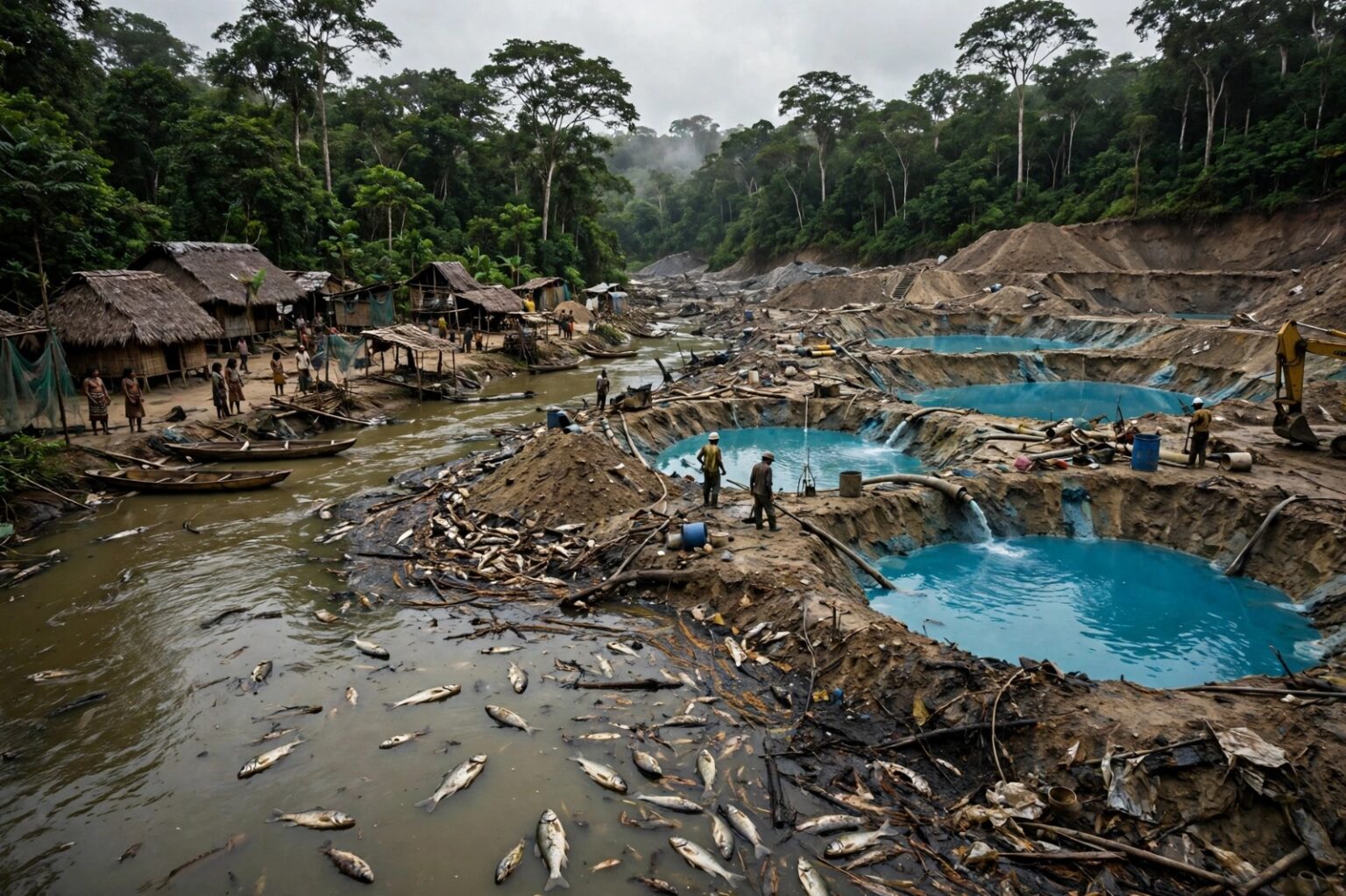
Take Raposa Serra do Sol, in Roraima State. At approximately 1.75 million hectares, it is one of Brazil’s biggest indigenous areas; located near the borders of Guyana and Venezuela, Raposa Serra do Sol is also home to multiple communities. However, illegal miners have recently entered the territory and begun processing the area’s ores with cyanide, extracting gold from them. After the miners use the cyanide, they leave behind large open pits of contaminated water that contains high levels of toxicity. Not only can the fumes emitted from these pits cause people to suffocate, but the contaminated water can severely pollute the surrounding soils and rivers.
Federal prosecutors are calling for immediate action because federal inspectors have located at least twelve such facilities. During July of 2026, the Federal Police apprehended two individuals; they also seized approximately 375 kilograms (kg) of what appears to be cyanide, as well as 1,250 kg of activated carbon, which is used for processing. The previous year, the Federal Police shut down an illegal laboratory in Boa Vista that was associated with rock and water contamination caused by cyanide in the area. Some of the most affected communities include Napoleão, Raposa I, and Parnasio.
And what makes cyanide so appealing? One reason is the increased difficulty and cost of obtaining mercury due to stricter regulations. Additionally, cyanide can recover over 90 percent of the gold present in ore, as opposed to only about 30 to 50 percent recovered using mercury. However, unlike legal mining operations that utilize containment systems, illegal miners simply abandon their open ponds. During heavy rainfall events, these ponds will spill over into the surrounding rivers, which are relied upon by many individuals for both their drinking water and seafood.
Mercury, however, remains on the same location. Huge amounts of mercury are released into the Amazon basin through illegal mining. Studies conducted in Peru’s Madre de Dios region, as well as some areas of Brazil and Bolivia close to the Madre de Dios region, show high levels of mercury in fish and in the bodies of indigenous and riverside residents; many times these levels exceed the safety guidelines set by the World Health Organization. Due to the fact that mercury accumulates in the food chain, there is a greater risk of neurological damage to children and pregnant women.
Indigenous leaders and environmental groups are warning us that both pollutants harm aquatic life, contaminate our food supply, and pose a danger to the health and survival of communities who rely on healthy rivers. Although Brazil’s Environmental Agency (IBAMA) and the Federal Police have stopped some mining operations, the price of gold continues to draw illegal miners further into remote areas. Peru also has similar issues with illegal mining as Brazil does.
Experts point to a few things that could help:
Cutting off the chemical supply chains miners depend on
Better monitoring of Indigenous lands
Cleaning up contaminated sites
Supporting alternative livelihoods
If we continue to ignore this problem, the contaminated water sources (the toxic ponds) and polluted river systems will continue to pose a threat to both Indigenous communities, who rely on those resources for survival, as well as the freshwater ecosystems that are vital to supporting the entire rainforest.
Also Read: India’s Garbage Problem: Big Numbers, Slow Progress