



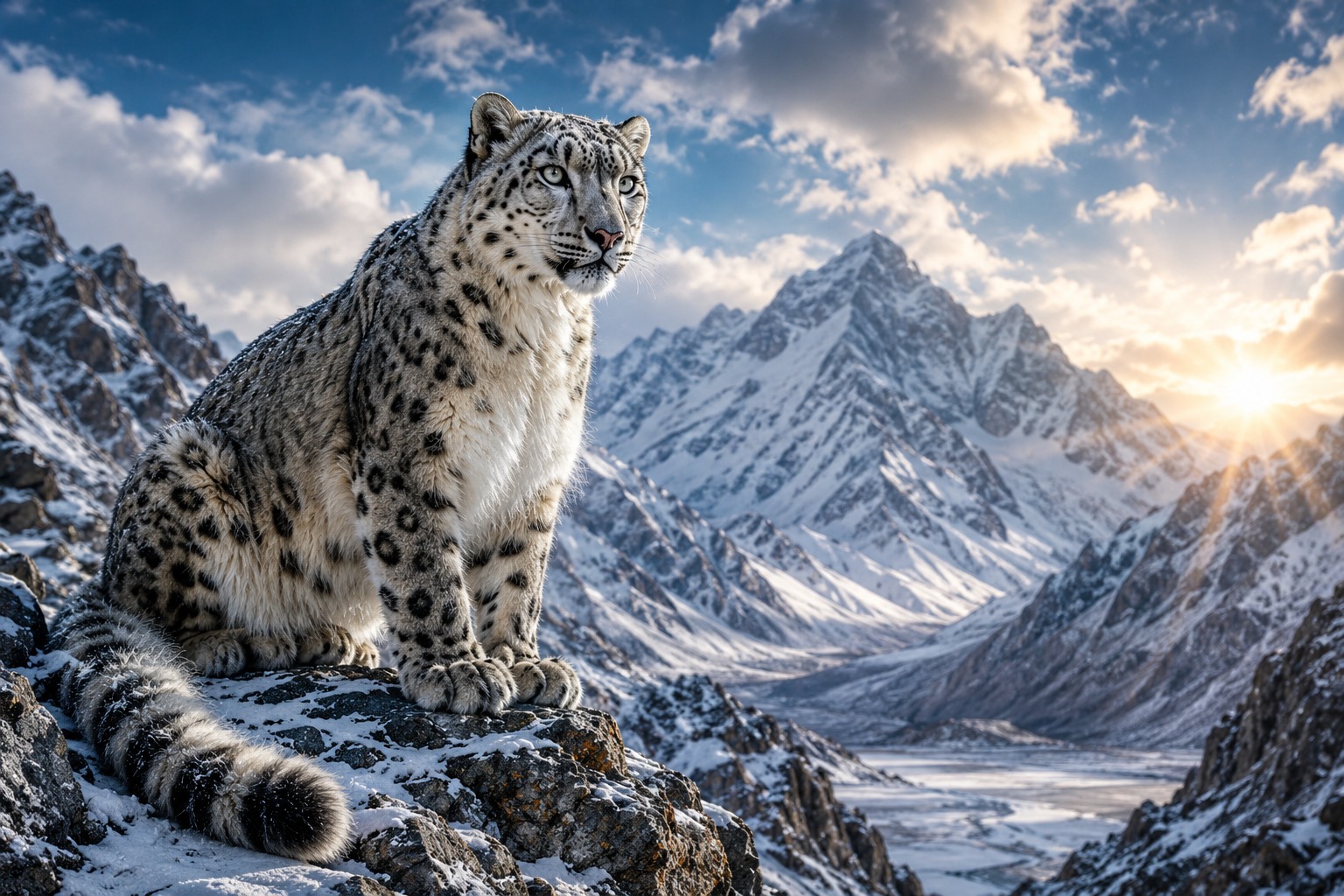
India’s first high-altitude wildlife safari aims to curb illegal off-roading while creating sustainable employment for local communities in Ladakh.
Guided Jeep circuits planned across Hemis National Park and Changthang Wildlife Sanctuary to safeguard fragile ecosystems and rare biodiversity.
Environment Pulse Desk
Ladakh and tourism go hand in hand. The beauty of Ladakh attracts lakhs of tourists across the year. While the serene vibes of the place lure many, a new dimension is going to be added to Ladakh’s tourism scene. The Union Territory has given the green light to guided jeep safaris, a move meant to let visitors get closer to the region’s wildlife without tearing up its fragile mountain ecosystem in the process.
The decision to this effect was taken at a crucial first governing body meeting of the newly formed Snow Leopard and High-Altitude Nature (SHAN) Conservation Society.
The meeting was chaired by Lieutenant Governor VK Saxena, where the focus was squarely on how to grow tourism responsibly without putting more pressure on the region’s wildlife.
Reports suggest that If things go as planned, this will be India’s first proper high-altitude wildlife jeep safari setup — a real chance for tourists to spot snow leopards, rare birds, and other native species with trained guides leading the way.
Routes Are Being Mapped Out
As per latest details, the job to build safari routes have been assigned to the Forest Department based on what’s already worked at places like Kaziranga and Ranthambore.
The experience promises to include open-back vehicles, local drivers who know the terrain, and certified guides who can actually explain what you’re looking at.
On the other side is the economic angle. Officials are hoping the program creates jobs for local communities, while also making sure tourists walk away with a real understanding of Ladakh’s biodiversity instead of just snapping photos and moving on.
Why This Matters: Cutting Down on Illegal Off-Roading
The idea essentially is to cut down illegal off-road driving, which has quietly been chipping away at the landscape and unsettling wildlife for years. Giving tourists proper, marked routes to follow is the administration’s way of saying: come see the beauty, just don’t wreck it while you’re at it. It should also just make for a better trip overall — organized, guided viewing beats aimlessly driving through sensitive habitat any day.
Which Areas Are on the List
The Forest Department is eyeing several safari circuits across several major conservation zones — Hemis National Park, Changthang Wildlife Sanctuary, Karakoram Wildlife Sanctuary, and stretches of Nubra, Zanskar, Sham, Kargil, and Drass. These have not been shortlisted randomly; they’re known snow leopard territory and home to a wide range of bird species.
All these routes will be planned carefully to avoid breeding grounds and other sensitive spots, while still giving visitors a genuine shot at seeing wildlife.
Ladakh’s Snow Leopard Numbers Say It All
If you’re talking snow leopards in India, Ladakh is the place. It holds around 477 of the country’s estimated 718 snow leopards — by far the largest population anywhere in India. And it’s not just snow leopards. Despite the tough climate and rugged terrain, the region is home to over 38 mammal species, close to 340 types of birds, and nearly 1,800 vascular plant species.
That kind of biodiversity has been pulling in wildlife photographers, birdwatchers, and researchers for years now.
With these safaris, the idea is simple on paper but tricky in practice: let more people experience Ladakh’s wild side without loving it to death. It’s a bet that tourism and conservation don’t have to be at odds — if it’s done right.