



By using this site, you agree to the Privacy Policy and Terms of Use.
Accept
Environment PulseEnvironment PulseEnvironment Pulse
Notification Show More
Font ResizerAa
  • ईको सिस्टम
    • जल
    • जंगल
    • जमीन
    • हवा
    • खनिज
    • जैव-विविधता
    • गतिविधियां
  • कचरा-प्रबंधन
    • ग्रीन बिजनेस
    • रीसाइकलिंग
    • इन्नोवेशन
    • इनिशिएटिव्स
  • फ्यूचर ग्रीन
    • ऊर्जा
    • सस्टेनिबिलिटी
    • इलेक्ट्रिक व्हीकल
    • कृषि एवं खाद्य
  • ओपिनियन
    • विचार
    • इम्पैक्ट फीचर
    • स्टोरी
  • मल्टीमीडिया
    • वीडियो
Reading: Nature as Medicine: Why Green Spaces Are Gaining Ground in Mental Health Care
Share
Font ResizerAa
Environment PulseEnvironment Pulse
  • ईको सिस्टम
  • कचरा-प्रबंधन
  • फ्यूचर ग्रीन
  • ओपिनियन
  • मल्टीमीडिया
Search
  • ईको सिस्टम
    • जल
    • जंगल
    • जमीन
    • हवा
    • खनिज
    • जैव-विविधता
    • गतिविधियां
  • कचरा-प्रबंधन
    • ग्रीन बिजनेस
    • रीसाइकलिंग
    • इन्नोवेशन
    • इनिशिएटिव्स
  • फ्यूचर ग्रीन
    • ऊर्जा
    • सस्टेनिबिलिटी
    • इलेक्ट्रिक व्हीकल
    • कृषि एवं खाद्य
  • ओपिनियन
    • विचार
    • इम्पैक्ट फीचर
    • स्टोरी
  • मल्टीमीडिया
    • वीडियो
Have an existing account? Sign In
Follow US
Environment Pulse > ओपिनियन > स्टोरी > Nature as Medicine: Why Green Spaces Are Gaining Ground in Mental Health Care
AI Image
स्टोरी

Nature as Medicine: Why Green Spaces Are Gaining Ground in Mental Health Care

Environment Pulse
Last updated: October 13, 2026 8:36 pm
Environment Pulse
Published: October 13, 2026
Share
AI Image
SHARE

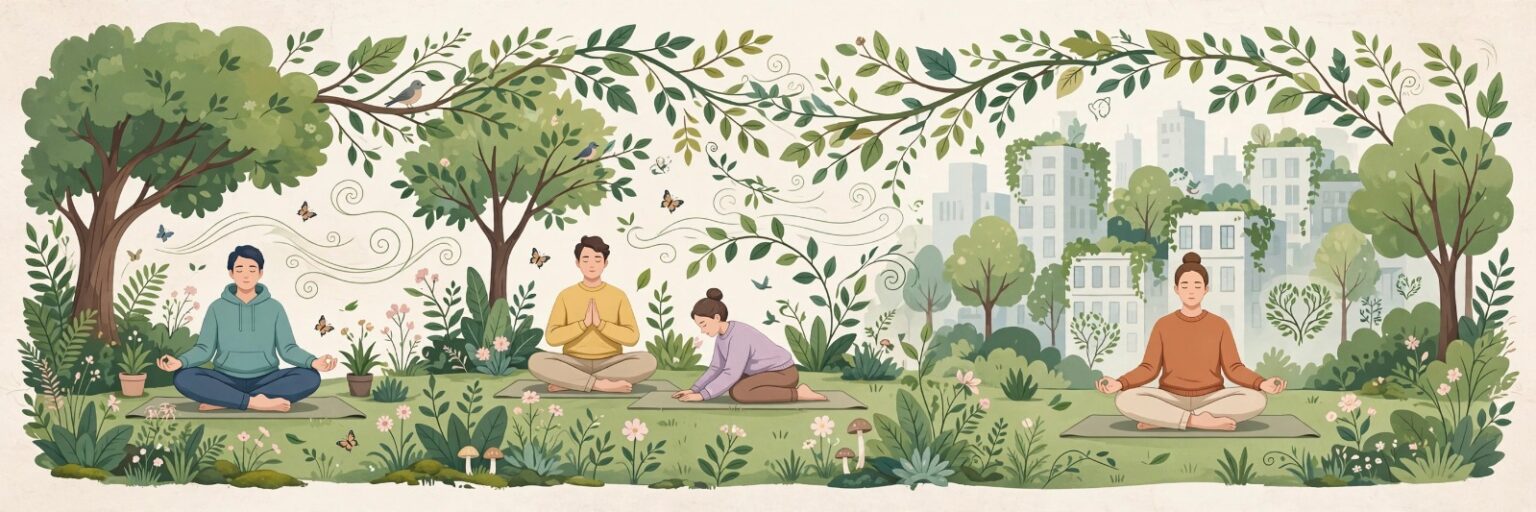
This article explores the growing recognition of nature—specifically urban green spaces—as a vital form of public mental health infrastructure. Traditionally, mental health treatment has relied on medication, therapy, and clinical intervention. However, a growing body of research suggests that spending time in natural settings can significantly improve mental well-being.

Contents
What the research suggestsFrom concrete to canopyThe New NormalWhat you can try

Environment Pulse Desk: In order to provide mental health treatment to individuals who are experiencing mental illness, the traditional method of providing care has historically involved the administration of medication, therapy, and clinical intervention. There is a growing body of research that indicates a simple walk in the forest could be the most effective means of helping individuals with mental illness.

Over the last few years, scientists have begun to see how the natural world can actively assist individuals who suffer from mental health issues (i.e., stress, anxiety, depression), as opposed to just providing a pleasant environment.

What the research suggests

A relatively short period of time (e.g., 20 minutes) can have a dramatic effect. Researchers at the University of Michigan (2019) published a research paper in Frontiers in Psychology. This research paper indicated that those who spent 20-30 minutes either sitting or walking outside in an area that appeared to be “natural” experienced the greatest reduction in cortisol levels – a major stress hormone produced by the human body. Although the research was conducted on a relatively small number of participants, many researchers use this research as evidence to support the idea that spending time in nature positively impacts mental well-being. Furthermore, sunlight is essential for maintaining the body’s internal clock, which regulates both emotional state and sleep habits.

Anxiety and mental fatigue are associated with long-term exposure to contaminated air, especially with regard to PM2.5.

A natural setting with animals creates a sense of calm. The sounds made by birds, rustling leaves, and various kinds of plant life create a form of mental restfulness that psychologists call “soft fascination.” “Soft fascination” gives the brain a chance to relax after being subjected to the constant stimulation of screens and vehicular traffic, which do just the opposite.

From concrete to canopy

These three types of urban green spaces (Miyawaki forests in Mumbai, the Yamuna Biodiversity Park in Delhi, and community gardens in Lucknow) are now recognized as being more than just green spaces. In reality, they are considered to be a form of public mental health infrastructure.

The New Normal

Rapidly growing urban centers, large areas of asphalt, and various types of pollution caused by industrial processes (e.g., the massive quantities of carbon dioxide generated in the production of cement), have severely limited the number of locations where individuals can find quiet, pollution-free environments. Such environments are essential in helping to address global warming, and also critical in supporting the mental well-being of every citizen.

What you can try

Get some morning sunlight and greenery every day

Start a small balcony garden with long lasting plants like Tulsi, Aloe Vera, or Snake Plant.

Spend a weekend morning outdoors with your phone switched off

Back local plantation drives and clean-air campaigns

Going into nature to start is a very low cost alternative to having the help of an expert.

Also Read: Kalanamak Rice: How “Buddha Rice” is becoming a climate smart success story

You Might Also Like

क्या वाकई बदला बाढ़ प्रबंधन का मिजाज? ISRO की सेटेलाइट चेतावनी से लेकर ‘नदी के साथ जीने’ के नए मॉडल का सच
महादेव की नगरी में स्वच्छता का नया अध्याय
भारत में बढ़ता ई-कचरा बना बड़ी चुनौती, औपचारिक और अनौपचारिक क्षेत्र के बीच खाई बरकरार
India’s efforts towards tiger conservation are praiseworthy at the international level
लूला की जीत से पर्यावरण कार्यकर्ताओं में उत्साह, अमेजन वर्षावन की सुरक्षा के लिए अभी लंबी लड़ाई बाकी
TAGGED:cortisol reductiongreen spacesmental health carenature as medicinepublic health infrastructuresoft fascinationSustainable Livingurban forestry
Share This Article
Facebook Whatsapp Whatsapp LinkedIn Email Copy Link Print
1 Comment
  • Pingback: Home Is Going Green: Why Indians Are Filling Their Flats with Plants – Environment Pulse

Leave a Reply Cancel reply

Your email address will not be published. Required fields are marked *

Follow US

Find US on Social Medias
FacebookLike
XFollow
InstagramFollow
YoutubeSubscribe
LinkedInFollow
Popular News
AI Image
जमीनजल

अल नीनो से भारत में गर्म सर्दी का खतरा, गेहूं की फसल पर पड़ सकता है असर

Environment Pulse
Environment Pulse
October 9, 2026
56 क्रिटिकल मिनरल बॉक्स की नीलामी पूरी
एआई और सैटेलाइट डेटा से मालदीव में कटावग्रस्त समुद्र तटों को फिर संवारने की कोशिश
जलवायु परिवर्तन से पौधों पर पड़ता है क्षेत्रीय प्रभाव, संरक्षण के लिए अलग-अलग रणनीतियां जरूरी: अध्ययन
The Cuttlefish Didn’t Show Up. Now Scientists Are Scrambling to Understand Why

Categories

  • जल
  • जमीन
  • जंगल
  • जैव-विविधता
  • हवा
  • खनिज
  • ऊर्जा
  • ग्रीन जॉब
  • स्टोरी
  • इम्पैक्ट फीचर
  • वीडियो

About US

Environmentpulse.com is a bilingual (Hindi-English) news platform that presents high-quality news, views, and videos related to the environment.
Quick Link
  • ऊर्जा
  • खनिज
  • जैव-विविधता
  • जंगल
Top Categories
  • My Bookmark
  • Contact
  • Privacy Policy
Environment PulseEnvironment Pulse
© Pratham Publisher and Informatics Private Limited. All Rights Reserved. | Developed By: Tech Yard Labs
Welcome Back!

Sign in to your account

Username or Email Address
Password

Lost your password?
