


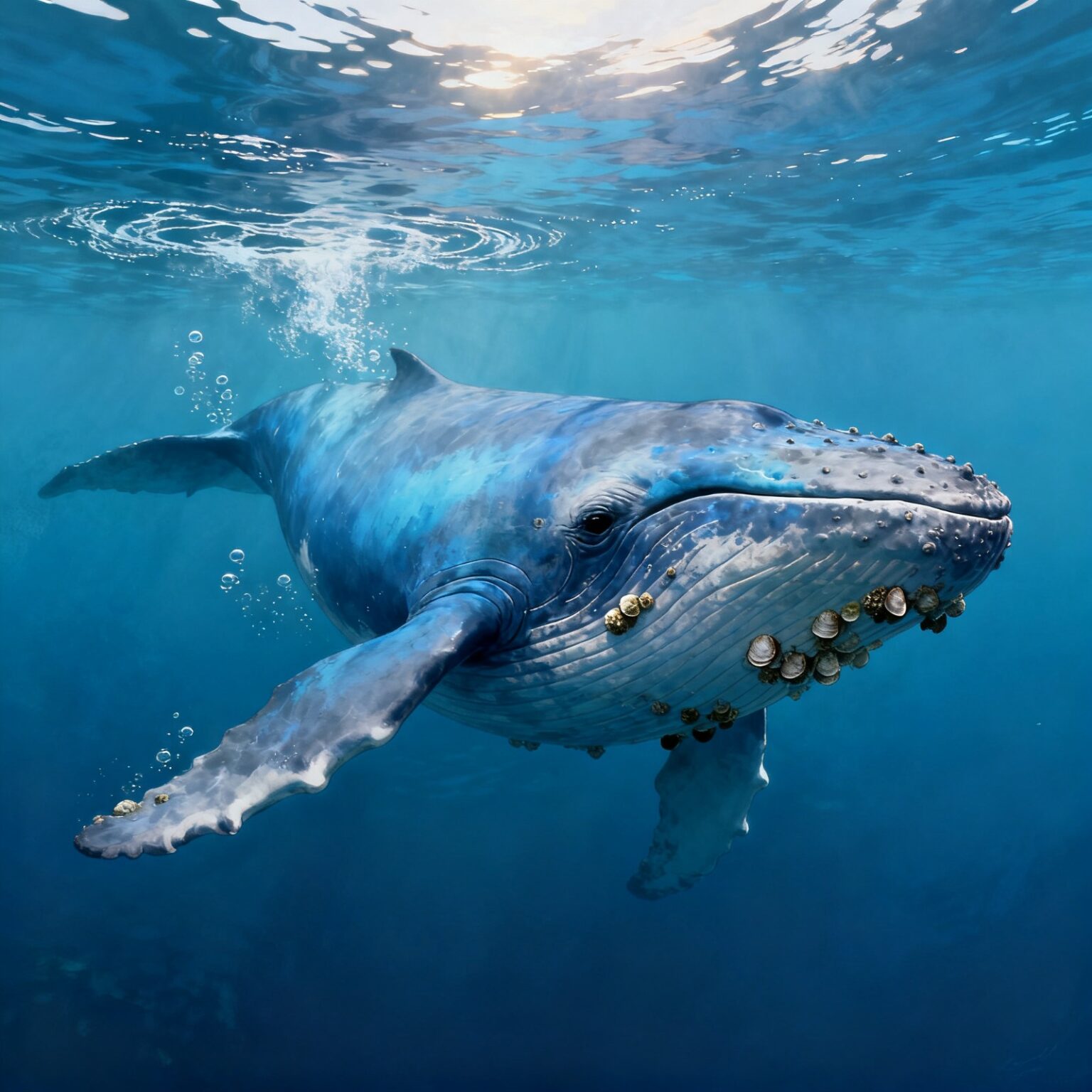

A decades-long study published in Frontiers in Marine Science reveals a dramatic ecological shift off the coast of East Greenland, where thousands of giant whales—including humpbacks, fin whales, and minke whales—are gathering in massive seasonal feeding frenzies. Driven by rapid climate change, declining sea ice, and rising ocean temperatures since around 2000, these baleen whales have moved into previously inaccessible coastal waters, following shifting prey like capelin.
Environment Pulse Desk: There’s something extraordinary happening off the coast of East Greenland right now. Thousands of giant whales—humpbacks, fin whales, and minke whales—are gathering in seasonal feeding frenzies in waters that were frozen solid just a few decades ago. It’s a dramatic ecological shift, and a stunning example of how rapidly climate change is reshaping the Arctic.
A decades-long study published in Frontiers in Marine Science has documented this remarkable transformation. The research reveals that these three whale species, historically rare or absent from the region, have moved into previously inaccessible coastal waters as pack ice has retreated. Scientists describe the gatherings as mixed-species “feeding frenzies,” with whales targeting dense schools of fish that have also shifted northward in response to warming waters.
The numbers tell a striking story of rapid change. Ship-based surveys recorded no humpback whales in the area until 2006. But sightings jumped explosively—seven in 2007, 26 in 2015, and more than 150 by 2024. Aerial surveys conducted in 2015 and 2024 showed an almost continuous distribution of all three species spread between 60°N and 70°N, well above the Arctic Circle. In summer 2024 alone, researchers estimated roughly 4,000 humpback whales, about 6,000 fin whales, and 4,500 to 6,000 minke whales were visiting the Greenland Sea.
Just a year later, in August 2025, crews reported aggregations of up to 50 whales feeding together near 69°N. The transformation began around 2000 and accelerated dramatically. Summer sea ice export through the Fram Strait dropped sharply, reducing the heavy coastal pack ice that had long barred these boreal whales from the region. Sea-surface temperatures rose by about 1–2°C since the late 1990s, making this one of the fastest-warming ocean areas on Earth.
At the same time, capelin—a key prey species for these whales—shifted their summer feeding grounds from waters north of Iceland toward the East Greenland shelf. The whales, following their food source, moved north with them. According to Prof. Mads Peter Heide-Jørgensen of the Greenland Institute of Natural Resources, who led the research, ” Rising ocean temperatures and declining sea-ice cover have facilitated the widespread occurrence of baleen whales along the East Greenland coast, as far north as 70°N.
This has led to regular mixed ‘feeding frenzies’ of fin whales, humpback whales, and common minke whales—species which historically were only rarely observed in coastal East Greenland.” The scale of consumption is staggering. The three species are estimated to consume at least 800,000 tonnes—and potentially over 1 million tonnes—of fish and krill during a single summer season.
Satellite tags attached to some whales showed that individuals remain in the area well into October, maximizing their time in these newly abundant feeding grounds. Local Inuit hunters have also reported increased sightings and noticed significant changes in prey availability, corroborating what scientists are documenting. However, while the whales are thriving, the broader ecosystem picture is more complex and concerning. Ice-associated Arctic species such as narwhals are now sharing—or in some cases being displaced from—habitat with these temperate baleen whales that generally avoid ice-covered waters. Researchers call the change a major “regime shift” in Arctic marine ecology, and the long-term consequences for the broader ecosystem remain uncertain.
The study that documented this transformation combined decades of data from multiple sources: ship and aerial surveys, satellite tracking of individual whales, stomach-content analysis, and reports from Inuit hunters with deep knowledge of their local waters.
This comprehensive approach underscores how rapidly warming is rewriting the map of Arctic marine life—turning a once-frozen frontier into a summer hotspot for some of the ocean’s largest predators and reshaping which animals inhabit these waters.
Also Read: मौसम का बड़ा अलार्म: ‘लिविंग मेमोरी’ का सबसे ताकतवर अल नीनो दे सकता है दस्तक