
Commitment toward sustainable solutions can alter the current trajectory
Collective responsibility essential to avert irreversible environmental damage
Environment Pulse desk
New Delhi: The air quality in metropolitan cities has increasingly become a vital indicator of the health of the planet’s environment. Beyond being a local public health concern, ongoing air pollution in major urban centers reflects deeper systemic challenges related to energy consumption, transportation patterns, industrial growth, waste management, and urban planning.
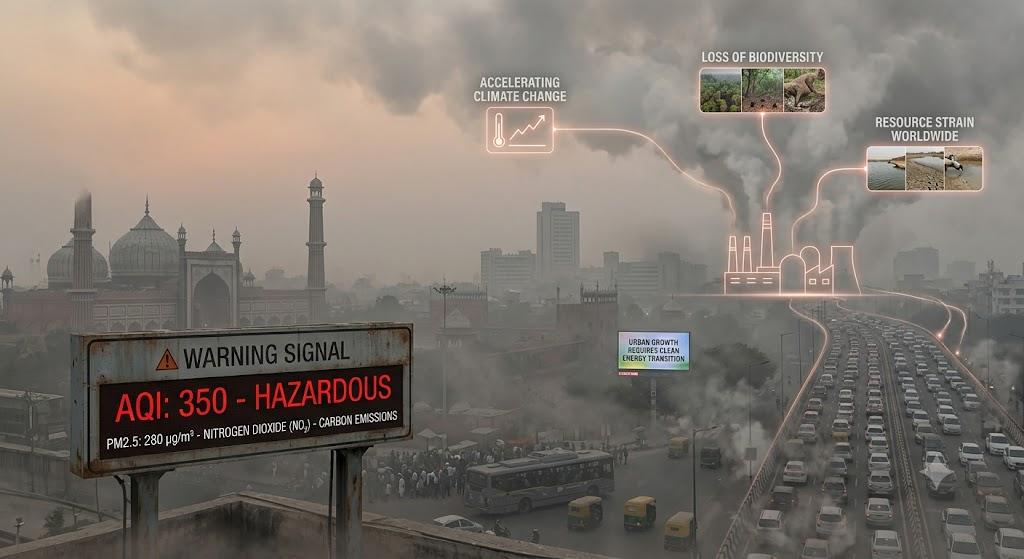
Environmental experts caution that declining air quality in cities serves as an early warning sign of broader ecological deterioration. If immediate action is not taken, pollution trends in metropolitan areas risk exacerbating climate change, the loss of biodiversity, and resource strain worldwide. Urban Centers Confront Ongoing Pollution Issues Numerous major cities across Asia, Africa, the Middle East, and certain regions in China continue to contend with elevated levels of air pollution. The primary pollutants include PM2.5 (fine particulate matter), nitrogen dioxide (NO₂), ozone (O₃), carbon emissions, and various other toxic substances released by vehicles, industrial activities, construction sites, and biomass burning. Delhi, the capital of India, frequently ranks among the most polluted capitals globally. Recent data indicate that the city’s annual PM2.5 concentration consistently exceeds the World Health Organization’s recommended guideline levels, with pollution often worsening during winter due to climatic conditions, vehicle emissions, industrial activity, and the burning of crop residues. Other Indian metropolitan areas such as Mumbai, Kolkata, and Bengaluru also experience phases of heightened pollution, largely attributed to traffic congestion, construction dust, and rapid urban expansion.
Globally, only a small percentage of monitored cities comply with the WHO’s recommended air quality standards, underscoring the magnitude of the environmental challenge. Air Pollution and Climate Change: A Perilous Cycle Poor air quality is intrinsically linked to climate change. Pollutants like black carbon, methane, and ground-level ozone function as short-lived climate pollutants that contribute to global warming. Urban emissions drive up global temperatures, while increasing temperatures further exacerbate air pollution by accelerating ozone formation, heightening wildfire risks, and intensifying dust events. This results in a detrimental feedback loop between climate change and declining air quality.
Ecosystems and Biodiversity at Risk The ramifications of polluted urban air extend far beyond city limits. Airborne pollutants can harm vegetation, diminish plant productivity, contaminate soil and water systems, and negatively impact wildlife. In urban environments, pollution also contributes to the urban heat island effect, wherein built-up areas become considerably warmer than surrounding regions. This phenomenon can disrupt local weather patterns, increase heat stress, and diminish the capacity of urban ecosystems to sequester carbon emissions. Unmanaged Urban Growth Intensifies Pressure Rapid urban expansion has heightened reliance on fossil fuels, personal vehicles, and energy-intensive industries. Urban areas already account for a substantial portion of global energy consumption and carbon emissions. Without an imperative transition toward renewable energy sources, cleaner public transit systems, effective waste management, and circular economy principles, environmental degradation may extend beyond city borders, affecting rural areas, oceans, and global ecosystems.
Public Health: An Indicator of Environmental Quality Human health stands as one of the most compelling indicators of the repercussions of poor air quality. Prolonged exposure to polluted air heightens the risk of respiratory diseases, cardiovascular conditions, neurological disorders, and premature mortality. The escalating health burden further poses economic challenges by elevating healthcare costs, diminishing productivity, and impacting overall quality of life. Experts liken urban populations to a “canary in the coal mine” regarding environmental change—acute pollution in cities signals deeper ecological pressures impacting society as a whole. Signs of Progress Inspire Optimism Despite these challenges; several cities have illustrated that effective policies can enhance air quality. Initiatives such as stricter emission regulations, the adoption of electric vehicles, the expansion of renewable energy, improvements in public transport, waste management reforms, and green infrastructure projects have yielded positive outcomes in some regions. Nonetheless, global progress remains inconsistent, with population growth, economic pressures, and climate impacts continuing to hinder improvements in many areas.
Potential Risks if Pollution Persists Should metropolitan air quality fail to improve, the ramifications may include: – Enhanced environmental degradation affecting rural ecosystems and oceans through pollution transfer. – Heightened climate impacts, encompassing extreme heat events, altered precipitation patterns, and ecological disruptions. – Increased inequality, as cities in developing nations bear disproportionate health and economic burdens. Air Quality as a Reflection of Human Choices The future of environmental sustainability will rely significantly on how cities tackle air pollution today.
Metropolitan air quality serves not only as a gauge of urban cleanliness but also as a reflection of global decisions surrounding energy, mobility, consumption, and development. While the outlook remains daunting, the situation is not beyond redemption. Strong commitment toward clean energy, sustainable transport solutions, responsible urban planning, and international collaboration can alter the current trajectory. The air quality of today’s cities serves as a harbinger for the planet of tomorrow-making vigilant monitoring, proactive policy action, and collective responsibility essential to avert irreversible environmental damage.
(Photo courtesy: AI)