


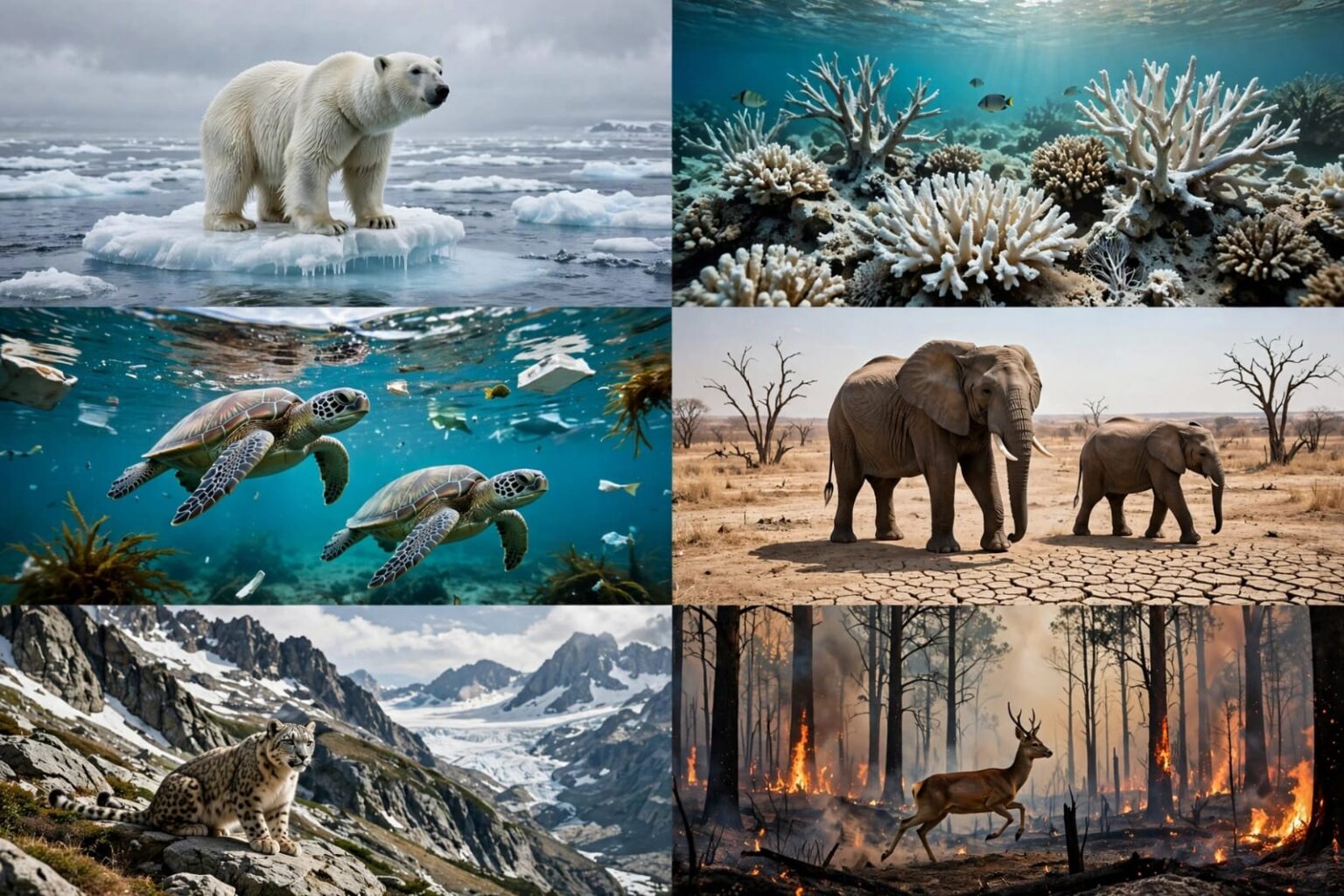

Climate change is profoundly impacting wildlife by disrupting critical survival factors: temperature, water, and food timing. The oceans, which previously absorbed massive amounts of heat and carbon dioxide, are becoming warmer and more acidic, leading to coral bleaching, damaged shellfish, and the migration of marine species toward the poles. On land and in mountains, animals like pikas and snow leopards are forced to move to higher altitudes, while melting Arctic sea ice shrinks habitats for polar bears and walruses.
Environment Pulse Desk: Climate change is not something wildlife experiences as news headlines or policy debates; instead, climate change is experienced by wildlife through their habitats (reef) turning white due to bleaching, their nesting beaches getting too hot, and their spring arriving earlier than when insects emerge. Climate changes affect three critical aspects of an animal’s survival: temperature, water and the timing of food.
The ocean is running out of room to help
For years, the ocean has provided a soft cushion for us. The ocean absorbs approximately thirty percent (30%) of all of the CO₂ we release into the atmosphere each year. The ocean also absorbs roughly ninety percent (90%) of the additional heat. However, this protection is being eroded. According to a recent assessment by the United Nations Environment Programme, there was an approximate six percent (6%) drop in the amount of carbon dioxide that can be taken up by the ocean. As a result of this decrease, more carbon dioxide will remain in the atmosphere.
The oceans are becoming increasingly stressed. Corals can turn white (bleach) if the temperature of the ocean remains even one degree Celsius higher than normal during the summer months, which causes them to expel the algae that provide food for the corals. Over half of all of the world’s coral reefs have been bleached since 2016. Shellfish and small plankton also find it difficult to construct their shells because of increasing acidity levels in the ocean. In addition, marine heatwaves have resulted in large numbers of dead fish and are forcing some types of fish such as mackerel and cod to move toward the North and South Poles at a rate of approximately 50 to 100 kilometers per decade.
Nowhere left to climb
In addition to moving on the ground, animals can also use the mountains to indicate when their choices have been exhausted. Animals such as pikas, snow leopards, and alpine amphibians are moving up slope toward the cooler air that is available only at higher altitudes. The mountains provide much of the world’s freshwater and contain 25 out of the 36 known biodiversity hotspots; however, only approximately 19 percent of the total mountain area has been designated as a protected zone.
As sea ice is shrinking in the Arctic, so are hunting grounds for polar bears, walruses, and ringed seals. Since 1980, summer sea ice has decreased by approximately 40%. Additionally, increased length of fire seasons and droughts have led to logging, which in turn reduces habitat for orangutans, koalas, and birds in the Amazon.
When the calendar breaks
Some of the worst effects involve timing. Migrating birds in Europe and North America currently arrive several weeks before what was once common practice. However, the caterpillar populations that these birds depend upon for feeding their offspring have also changed their schedules and are arriving at least as early as well. As a result, when the chicks emerge from their eggs, there is no longer a food source available for them. Both pied flycatchers and great tits have suffered as a result of this change; both species are experiencing lower survival rates.
Sea turtles have another issue. Their sex is determined by the temperature of the beach where they lay their eggs, and in certain areas of Australia and Florida, more than 90% of hatchlings are now female. Marmots emerge from hibernation earlier and face freezing temperatures with no food available.
Thirst, disease, and displacement
The severe droughts experienced by elephants and other large grazing animals in Kenya and Tanzania cause these animals to travel significantly farther in search of water, resulting in increased interactions with people. Amphibians are also in extreme danger: approximately 41% of all amphibian species are considered endangered due to a combination of factors including early drying of wetlands, and the accelerated growth of the chytrid fungus as temperature increases.
Warmer winters provide ticks, mosquitoes, and other types of parasites with a longer period of time to survive in areas where they used to freeze out. This means that warmer winters will hit animals like moose, reindeer, and birds harder than before. Heat and sea level rise are putting pressure on mangrove forests and seagrass meadows, which combined, remove approximately 407 million tons of CO₂ from the atmosphere each year. If these ecosystems fail, then the nursery grounds for young fish, shrimp, and turtles will fail as well.
Winners and losers
There’s a lot of things that aren’t losing. Rats, jellyfish, some gulls, and warm-water invasive fish are doing just fine. The ones that are struggling are the “specialist” animals. Specialist animals need to live within certain limits of temperatures, elevations, or what they eat.
Recent UN reports emphasize how monitoring the ocean, preserving mangroves and seagrass beds, and reducing emissions are interconnected. The ocean will not serve as a long-term buffer to climate change if both the oceans continue to warm and become more acidic.
Also Read: Nepal’s Floods Leave a Lasting Human Toll as Climate Risks Grow