


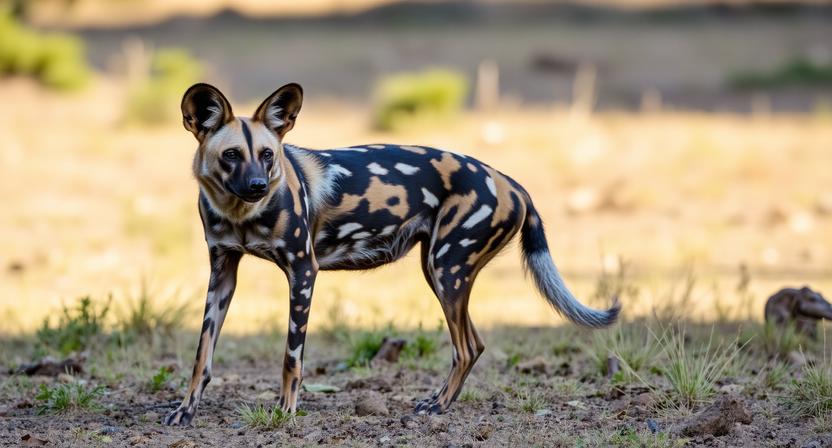

Three brother wild dogs, known as the “Mayukuyuku males,” have completed what scientists are calling the longest movement ever recorded by an African land mammal. Leaving their natal pack in Zambia’s Kafue National Park in mid-2025, the GPS-collared trio trekked over 4,000 kilometers (approx. 2,500 miles) across the country in search of mates and new territory.
Environment Pulse Desk: Conservation scientists say the unprecedented journey offers rare insight into wildlife resilience — and the fragile corridors that make it possible.
Three brother wild dogs have completed what researchers are calling the longest movement ever recorded by an African land mammal, trekking more than 4,000 kilometers — roughly 2,500 miles — across Zambia in search of mates and territory of their own.
The animals, dubbed the Mayukuyuku males by the scientists tracking them, are litter mates who left their natal pack in Kafue National Park in mid-2025. Fitted with GPS collars, they were monitored for eight to nine months as they wound their way across the country, repeatedly changing course to avoid cities, farmland, roads, and other human-dominated terrain. By April 2026, they had settled in a game management area between South Luangwa and Lower Zambezi national parks, having covered approximately 4,126 kilometers, or 2,564 miles.
Notably, the straight-line distance between where the dogs started and where they ended up was only 260 to 420 kilometers — a fraction of the ground they actually covered. The gap illustrates just how much the animals maneuvered to skirt human infrastructure along the way.
“It’s the longest African mammal movement on record, and the longest recorded wild dog dispersal,” said Matt Becker, chief executive of the Zambian Carnivore Programme and a co-author of the study, which involved researchers from the Programme, Montana State University, and several partner organizations.
African wild dogs live in highly social packs and, like many species, avoid breeding with close relatives. As a result, young adults typically disperse around age two or three to seek out unrelated mates and establish new territory. Unlike seasonal migration, this dispersal is a one-way journey undertaken in search of breeding opportunities. Researchers believe the three brothers have since established a new range, though the composition of any resulting pack is still being studied.
The findings, published in the journal Ecology, offer what the study’s authors describe as cautious optimism about the connectivity of wild dog populations across eastern and southern Africa. Lead author Scott Creel, a professor at Montana State University, said the research suggests that major populations outside fenced reserves may remain linked to one another, provided the landscapes between them stay passable. The Mayukuyuku males’ ability to navigate such a fragmented, human-influenced route, he noted, speaks both to the species’ resilience and to the urgent need for wildlife corridors connecting protected areas.
The same tracking effort also underscored the risks such journeys carry. Other collared wild dogs, including females that traveled considerable distances of their own, encountered wire snares set for bushmeat hunting; some did not survive. African wild dogs are classified as endangered, with an estimated 6,000 individuals remaining across the continent, and conservationists point to habitat fragmentation, human expansion, and snaring bycatch as leading threats to the species’ survival.
Researchers say the record-setting trek reinforces the importance of preserving and restoring ecological links between parks and reserves. Wide-ranging species such as wild dogs and elephants rely on these corridors to maintain genetic diversity and long-term population viability as development continues to reshape the landscape. The Mayukuyuku brothers’ journey, scientists say, has provided a rare and valuable dataset — one that could help guide future conservation strategy as human and wildlife territories increasingly overlap.
Also Read: Billions Still Without Clean Water and Basic Sanitation as 2030 Deadline Looms