

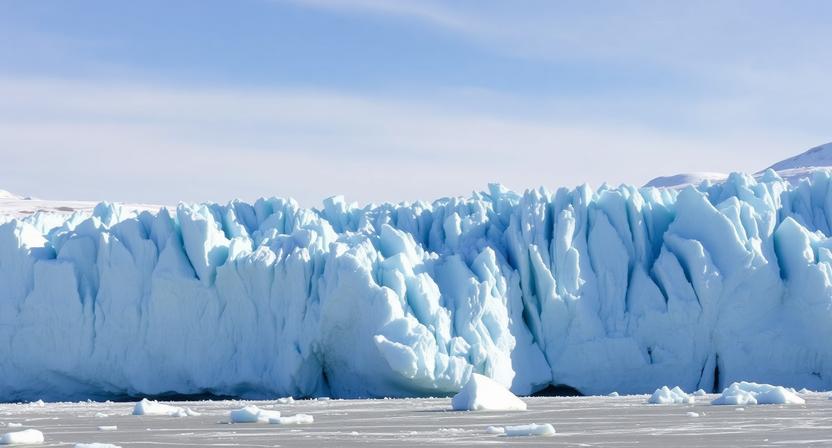

A massive slab of ice, roughly the size of Manhattan (76 square kilometers and 150 meters thick), has broken off Greenland’s Petermann Glacier. Captured by the European Space Agency’s Sentinel-1 satellite on August 4, 2026, this represents the largest Arctic calving event since 2020 and Petermann’s largest loss since 2012. Researchers have been tracking developing cracks here since 2019. The newly formed “ice island” is currently drifting down Petermann Fjord toward Nares Strait. Scientists warn that two additional large sections nearby are heavily fractured and could also detach soon, potentially shrinking the glacier’s floating ice shelf and raising questions about long-term stability and global sea-level impacts.
Environment Pulse Desk: A huge slab of ice about the size of Manhattan has broken away from Greenland’s Petermann Glacier, and scientists caught the whole thing on satellite.
The split happened on August 4, 2026, and was picked up by the European Space Agency’s Sentinel-1 satellite. The newly formed iceberg — known as an “ice island” — spans roughly 76 square kilometers (about 29 square miles) and runs as thick as 150 meters, nearly 500 feet. It’s the biggest chunk Petermann has lost since 2012, and the largest calving event anywhere in the Arctic since 2020.
Radar images from August 3 already showed cracks spreading down the middle of the glacier’s floating tongue. Just a day later, the slab had broken completely free from the eastern edge. Sentinel-1’s radar can see through darkness and clouds, which makes it one of the few reliable ways to keep an eye on what’s happening in such a remote part of the world.
Researchers from the University of Ottawa, the University of Stirling, and several other institutions have had Petermann under close watch since 2019, tracking the slow spread of cracks and other warning signs in the ice.
“Petermann Glacier has long been one of Greenland’s largest remaining ice tongues,” said Adam Garbo, a PhD student at the University of Ottawa who was the first to spot the break in the satellite data. “We’ve anticipated this break for years, and seeing it finally happen is remarkable.”
Since breaking off, the ice island has been drifting down Petermann Fjord toward Nares Strait. It bumped into Joe Island in late August but stayed mostly in one piece and kept moving southwest. Over time, tides, wind, currents, and melting are expected to break it down into smaller fragments.
And this might not be the last of it. Scientists have identified two more large sections of the ice tongue — each around 87 to 97 square kilometers — that are already crisscrossed with rifts and could break away next. If they do, combined with this latest event, they’d substantially shrink what’s left of Petermann’s floating ice shelf.
Petermann is one of Greenland’s major glaciers, funneling ice from the ice sheet into the Arctic Ocean. Calving is a normal part of a glacier’s life cycle, but researchers are watching closely for signs that these events point to deeper shifts in the glacier’s stability — changes that could affect how much ice reaches the ocean and, eventually, global sea levels.
Satellites will keep tracking the ice island as it drifts and breaks apart.
Also Read: बेंगलुरु की सुरंग परियोजना से भूजल पर गंभीर खतरे की आशंका