

The massive Great Nicobar Island development project—encompassing a transshipment terminal, airport, power plant, and township across 166 square kilometres—is facing intense backlash from scientists and conservationists over potential irreversible damage to its coral reefs and coastal ecosystems. A central point of contention is the plan to translocate over 16,000 coral colonies from Galathea Bay, a process critics dismiss as an “illusion of mitigation” due to high die-off risks. Despite legal challenges, disputes over data mapping, and a recent UN committee call for a pause on infrastructure work, the National Green Tribunal upheld the project’s clearance in February 2026, balancing environmental concerns against India’s strategic Indo-Pacific interests.
Environment Pulse Desk: The Great Nicobar Island development project is once again under the microscope, as marine scientists and conservationists warn that its coral reefs and coastal ecosystems could suffer damage there’s no coming back from.
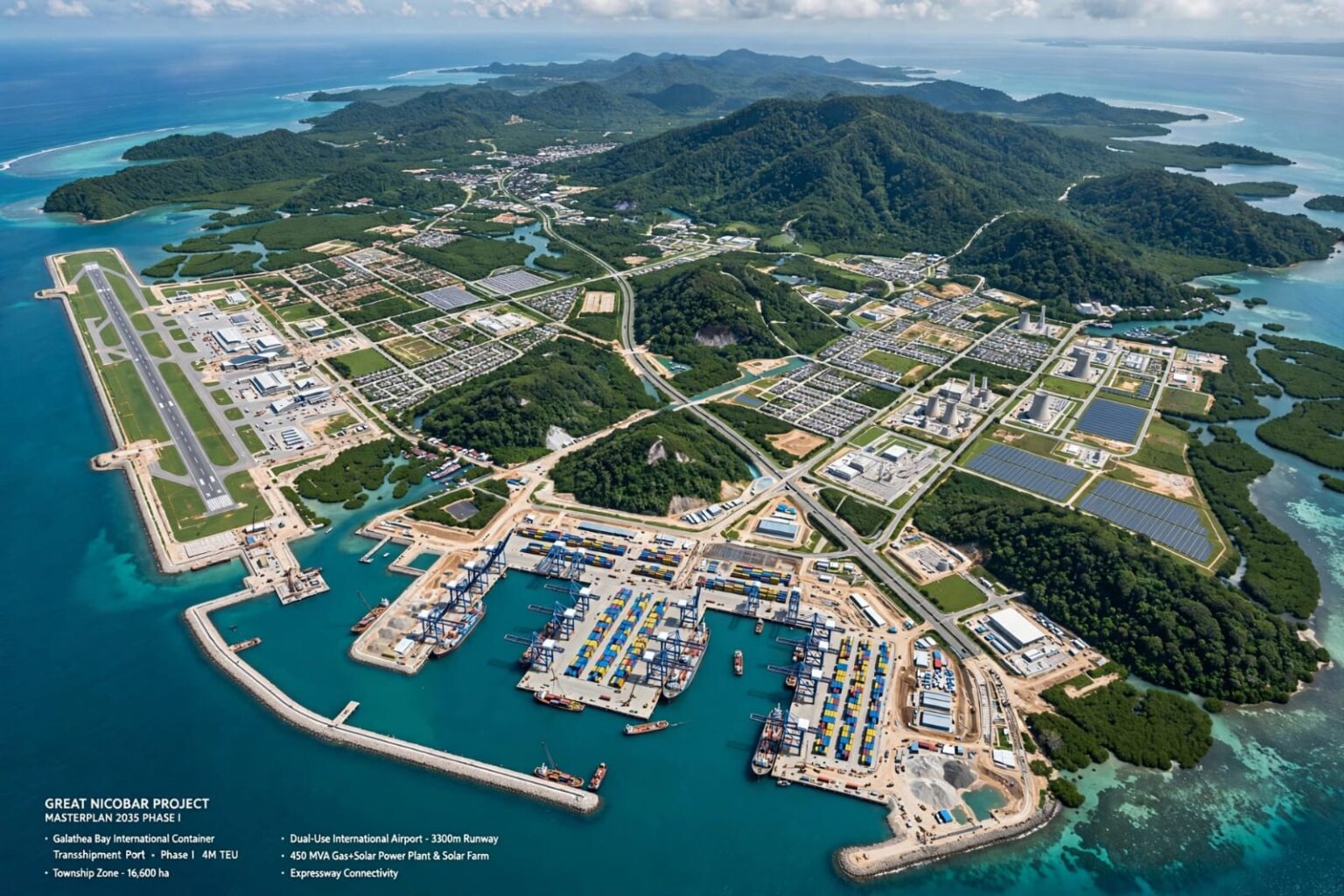
The project itself is enormous — a container transshipment terminal at Galathea Bay, a new airport, a power plant, and a township spread across roughly 166 square kilometres, all carrying a price tag somewhere between ₹80,000 and ₹92,000 crore.
The coral question
Galathea Bay sits at the heart of the controversy. The Zoological Survey of India has counted around 20,668 coral colonies there, and the current plan is to move about 16,150 of them — the ones within 15 metres of the surface — to four recipient sites on the island’s west coast, along with the giant clams that live among them. Colonies at greater depths still need further study before anyone decides what to do with them.
Not everyone is convinced this can actually work. Corals aren’t easy transplants — they’re finely tuned to their specific depth, currents, light, and micro-environment, and many of these colonies have been growing for centuries, if not longer. Pulling them up with saws, chisels, and hydraulic drills, critics say, invites high die-off rates and sediment damage that could ripple out across the wider reef. One researcher put it bluntly: disturbing these colonies amounts to an irreversible loss, and translocation is more of an “illusion of mitigation” than real protection.
A dispute over the data
Adding fuel to the fire is a disagreement over what the maps actually show. Some government-linked studies played down or left out coral presence in the project’s footprint — data that helped the National Green Tribunal grant clearance. But other sources tell a different story: the project’s own earlier impact assessment, ZSI’s surveys, and the Allen Coral Atlas all point to substantial reef cover in the area. When the NGT ruled in February 2026, it upheld the clearance, concluding no major reef sits within the immediate work zone, while still ordering close monitoring and protective measures. The tribunal leaned heavily on the project’s strategic value along key shipping routes.
More than just coral
The stakes go beyond the reefs. Galathea Bay is nesting ground for endangered leatherback turtles, and the dredging, land reclamation, added ship traffic, and long-term urban buildup threaten seagrass beds, mangroves, and the fish stocks that depend on them. The island also falls within a UNESCO Biosphere Reserve and the Sundaland biodiversity hotspot — home to species found nowhere else.
Legal fights and mounting pressure
The project has been contested in court since it first got environmental and forest clearance back in 2022, with petitioners pointing to thin, single-season baseline data, possible breaches of coastal zone rules, and impacts that extend well past the port itself. The pressure isn’t only domestic — in August 2026, a UN committee called for the infrastructure work to be paused until independent, comprehensive studies are done. Even a planned green AI data centre on the island was quietly shelved, a move some link to the same environmental concerns.
For their part, the project’s backers — including the Andaman and Nicobar Islands Integrated Development Corporation — say the safeguards are already built in: GPS-tagged coral monitoring, formal translocation protocols, and site selection based on ecological suitability. They frame the project as central to India’s strategic footprint in the Indo-Pacific.
What it comes down to is a familiar but sharpening tension — whether a development this large can coexist with one of India’s last largely untouched tropical marine ecosystems, or whether something has to give. For now, environmental groups are pushing for more transparency, independent data checks, and a much more cautious hand.
Also Read: Assam Flood Governance Overhaul: Experts Call for New Frameworks to Manage Chronic Regional Flooding