


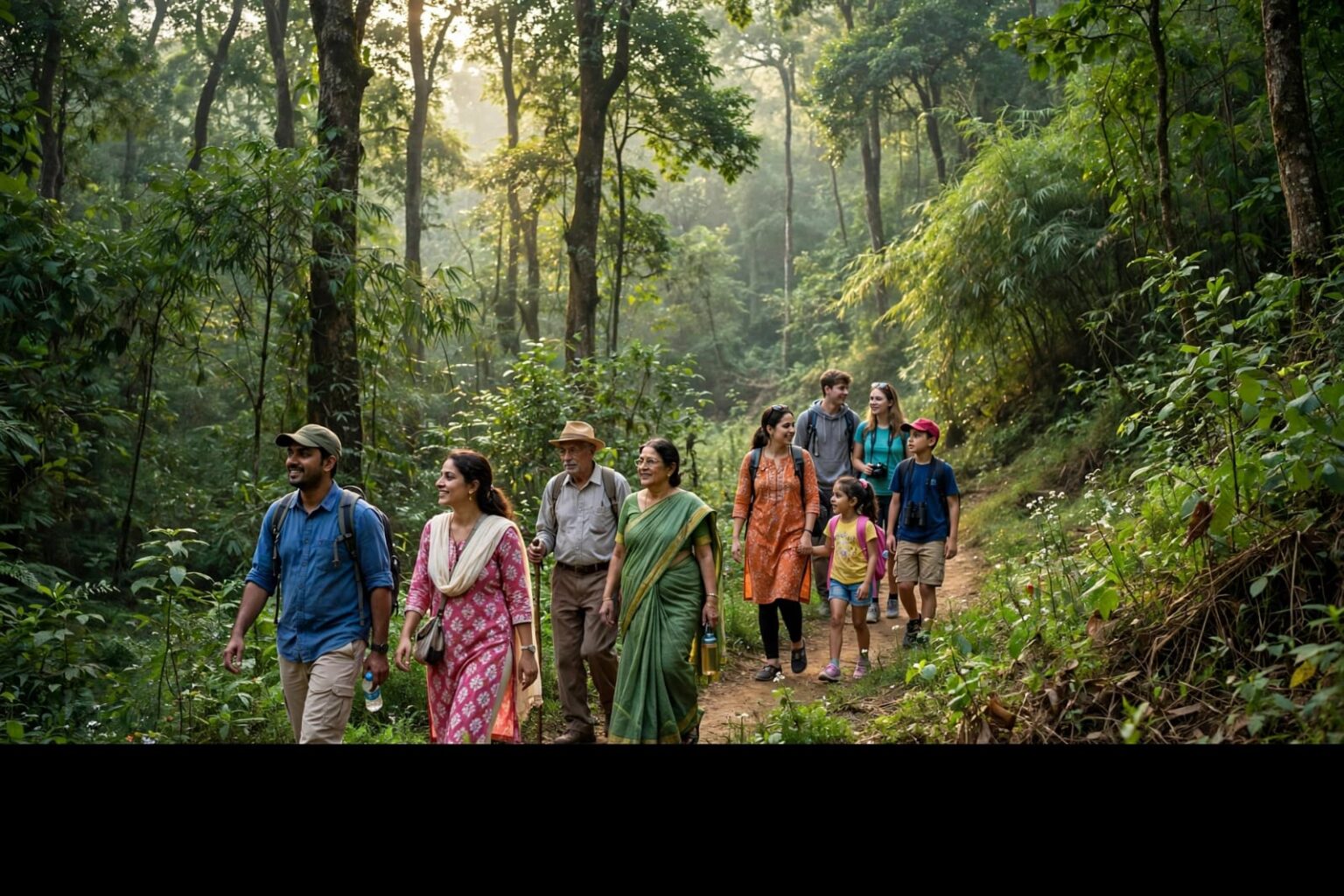

Lucknow and its surrounding regions offer a rich network of nature trails, urban forests, wetlands, and bird sanctuaries that highlight Uttar Pradesh’s growing focus on eco-tourism. Within the city, popular green spaces like Janeshwar Mishra Park and Ram Manohar Lohia Park provide expansive walking trails and lakes, while newer developments like the Laxmanpuri Ecotourism Reserve focus on sustainability and wellness.
Environment Pulse Desk: Lucknow, the historic capital of Uttar Pradesh, is often celebrated for its Nawabi heritage, kebabs, and graceful architecture. Yet beyond the city’s bustling streets and monuments lies a quieter side: accessible nature trails, urban forests, wetlands, and bird sanctuaries that offer respite from urban life. In recent years, Uttar Pradesh has prioritised eco-tourism, developing walking paths, interpretive trails, and conservation-linked experiences. For residents and visitors alike, these spaces — ranging from large city parks to nearby sanctuaries and farther wilderness areas — provide opportunities for walking, birdwatching, family outings, and a quiet reconnection with the natural world of the Gangetic plains.
This feature explores the main nature trails and green spaces in and around Lucknow, highlighting both established spots and emerging eco-tourism initiatives across the region.
Urban Parks and Everyday Trails Within Lucknow
Lucknow’s largest and most popular green spaces double as everyday nature trails for morning walkers, runners, families, and bird enthusiasts. Janeshwar Mishra Park in Gomti Nagar stands out as one of Asia’s largest urban parks, spanning hundreds of acres along the Gomti River. It features well-maintained double-loop trails ideal for moderate walks or runs of around 4–5 miles, taking roughly one and a half to two hours to complete. Verdant lawns, an artificial lake, and river views attract a variety of bird species throughout the year. The park is free to enter, open from early morning to evening, and suitable for picnics, cycling, and sunset watching. Newer additions nearby, such as a Jurassic-themed zone, add novelty, but the core appeal remains the open green expanse and the riverside paths that wind through it.
Ram Manohar Lohia Park offers a similarly moderate loop trail — about 5 miles — circling a central lake amid lush surroundings. It is particularly noted for birdwatching, with the water and greenery drawing local species throughout the day. The park supports walking, running, and relaxed family visits in a setting that feels noticeably calmer than the streets just beyond its gates.
Other city options include the Gomti Riverfront promenades, where landscaped walking and cycling tracks run alongside the water and kingfishers, egrets, herons, and other waterbirds are commonly spotted. Smaller parks such as Ambedkar Memorial Park and Eco Garden offer shorter, paved or landscaped paths well suited to leisurely strolls rather than serious exercise. None of these urban trails demand special preparation — comfortable shoes, a bottle of water, and a visit timed for early morning or evening are enough to make the most of them while avoiding both heat and crowds.
A newer and more deliberately designed addition is the Laxmanpuri Ecotourism Reserve on Rae Bareli Road, near SGPGIMS. Spread across roughly 12 acres, it places sustainability at its centre, with about 90 percent of the area left in a natural state. Highlights include a 2.5 km interactive nature trail featuring educational prompts about the environment placed along the path, a dense Miyawaki forest section, an “oxygen point” planted with high-oxygen-producing trees, cycling tracks, yoga zones, an open gym, and a children’s park. Inaugurated in early 2025, the reserve was built to serve wellness, education, and family recreation together, while keeping ecological disruption to a minimum.
Kukrail Reserve Forest: Lucknow’s Urban Forest Heart
Just 9 to 15 km from the city centre in Indiranagar, Kukrail Reserve Forest is Lucknow’s premier nature trail destination. Planted in the 1950s across thousands of acres as a deliberate green lung for the city, it features a stream — the Kukrail River — dense tree cover of teak, neem, peepal, eucalyptus and other species, plant nurseries, and a network of walking pathways. The forest is home to more than 200 bird species, best viewed in spring between March and April, along with nilgai, jackals, peafowl, and turtles. Its standout feature, though, is the gharial and crocodile rehabilitation and breeding centre — one of India’s key facilities dedicated to the endangered freshwater gharial — where visitors can observe these reptiles up close in a controlled, conservation-focused setting.
Trails wind through the forest toward picnic spots, a children’s park, a rose garden that is especially fragrant in winter, and a lake or stream area popular with visitors looking to slow down. Entry is typically free or low-cost, and the forest generally keeps daytime hours, roughly 9 am to 5 pm. Recent and ongoing development by the UP Eco Tourism Board and the state forest department has added dedicated nature-walk trails along the river for closer views of flora and birdlife, along with bamboo huts, an open gym, a cafeteria, and improved parking and toilet facilities. There are also long-term plans for a night safari, alongside further eco-facilities intended to position Kukrail as a major hub — all while keeping conservation as the guiding priority. It remains an ideal choice for a half-day or full-day outing, best visited in cooler months, and it’s worth moving in a group through the denser sections for safety.
Nearby, a planned Urmila Forest project along the Kukrail River, using Miyawaki afforestation methods, aims to further extend the city’s accessible green corridors with native species planted along unpaved walking trails.
Nearby Bird Sanctuaries and Wetland Trails
About 45 km west of Lucknow on the Kanpur highway (NH-25), in Unnao district, lies the Nawabganj Bird Sanctuary, now officially renamed the Shaheed Chandra Shekhar Azad Bird Sanctuary. A Ramsar-recognised wetland site covering roughly 2.25 square kilometres, it centres on a shallow lake and marsh fed by monsoon rain and canal water. The sanctuary supports both resident and migratory birds, with over 200 to 250 species recorded, including greylag goose, pintails, pochards, sarus crane, painted stork, open-bill stork, egrets, kingfishers, and threatened species such as the Egyptian vulture. Winter, from November through February or March, is peak season, when migrants arrive from as far as Siberia and Central Asia, forming congregations of thousands of waterbirds across the wetland.
Visitors can walk designated pathways and a cycle track, with bikes available for rent, use watchtowers and viewing platforms for a better vantage point, visit a small deer park, and take advantage of picnic and cafeteria facilities. Entry is modest — around ₹30 for Indian visitors, with higher charges for foreign visitors and cameras. The sanctuary offers a genuine sense of wilderness surprisingly close to the city, though its proximity to the highway and general upkeep can affect the experience somewhat; early morning visits are the best way to maximise bird activity and enjoy some quiet. It’s worth carrying binoculars and staying alert around monkeys in the area.
Other nearby options include Samaspur Bird Sanctuary, around 50 to 60 km east of the city, where interconnected lakes draw winter migrants and offer both boat and walking access. There’s also the emerging Niyamatpur eco-tourism hub in Barabanki, about 45 km away, which features a 2 km nature trail through forest, complete with interpretive boards describing native trees, a “Nature Haat” marketplace, basic amenities, and an overbridge — all designed as a low-impact weekend escape that puts biodiversity front and centre.
Farther Afield: Deeper into Uttar Pradesh’s Wilder Landscapes
For more immersive experiences, the trail network extends well beyond Lucknow’s immediate surroundings. Dudhwa National Park, part of the Dudhwa Tiger Reserve roughly 200 to 230 km north near the Nepal border, offers sal forests, grasslands, and wetlands, along with guided safaris, forest walks, and the chance to spot tigers, rhinos, swamp deer, elephants, and a rich variety of birdlife. Affordable travel packages from Lucknow have made the park increasingly accessible to visitors without their own transport. Katarniaghat Wildlife Sanctuary, farther into the same forest complex, adds riverine trails and boat safaris to the mix.
Closer, sacred or historically significant forest sites include Naimisharanya, around 90 km from the city, known for its ancient forest trails, and Bakhira Bird Sanctuary, roughly 100 km away. Visits to these sites require more planning, sometimes permissions for certain areas, and ideally an overnight stay to make the journey worthwhile.
Uttar Pradesh’s broader push also includes new biodiversity parks — such as the planned Gomti Bio-Diversity Park in Lucknow, envisioned with native vegetation, water bodies, watchtowers, and themed gardens — reflecting a statewide emphasis on conservation-linked tourism that extends well past the capital.
Practical Tips and Conservation Context
Winter, from October to March, is the best overall season for most trails, offering pleasant weather alongside peak bird activity. Spring is particularly well suited to birdwatching in forests like Kukrail, while the monsoon leaves parks lush and green, though trails can turn muddy. Water, binoculars, insect repellent, comfortable walking shoes, and light clothing are worth packing for most outings. Many sites are family-friendly with basic facilities in place, though group visits are advisable in denser forest sections. As with any natural area, the guidance is simple: avoid littering, stay on marked paths, and support conservation by not disturbing wildlife.
These green spaces serve a dual role as both recreational assets and ecological buffers amid rapid urbanisation. Challenges such as encroachment, invasive species, and habitat pressure remain real concerns, but initiatives like gharial breeding, Ramsar wetland recognition, Miyawaki plantations, and expanding eco-tourism infrastructure show active, ongoing efforts to protect and grow the region’s green cover. Local communities, in turn, often benefit through employment in guiding, hospitality, and related services tied to these sites.
In and around Lucknow, nature trails reveal Uttar Pradesh’s quieter natural heritage — from urban parks that double as the city’s daily lungs, to wetlands alive with migratory flocks, to forests harbouring ancient reptiles. Whether it’s a short morning loop by the Gomti or a winter day spent among the birds of Nawabganj, these paths invite exploration, exercise, and a deeper appreciation of the region’s biodiversity. As eco-tourism continues to grow thoughtfully across the state, they offer lasting value for both people and the landscapes that sustain them. Plan a visit, tread lightly, and discover the green side of Awadh.
Also Read: The Long Game: How Uttar Pradesh Is Learning to Live With a Changing Climate