


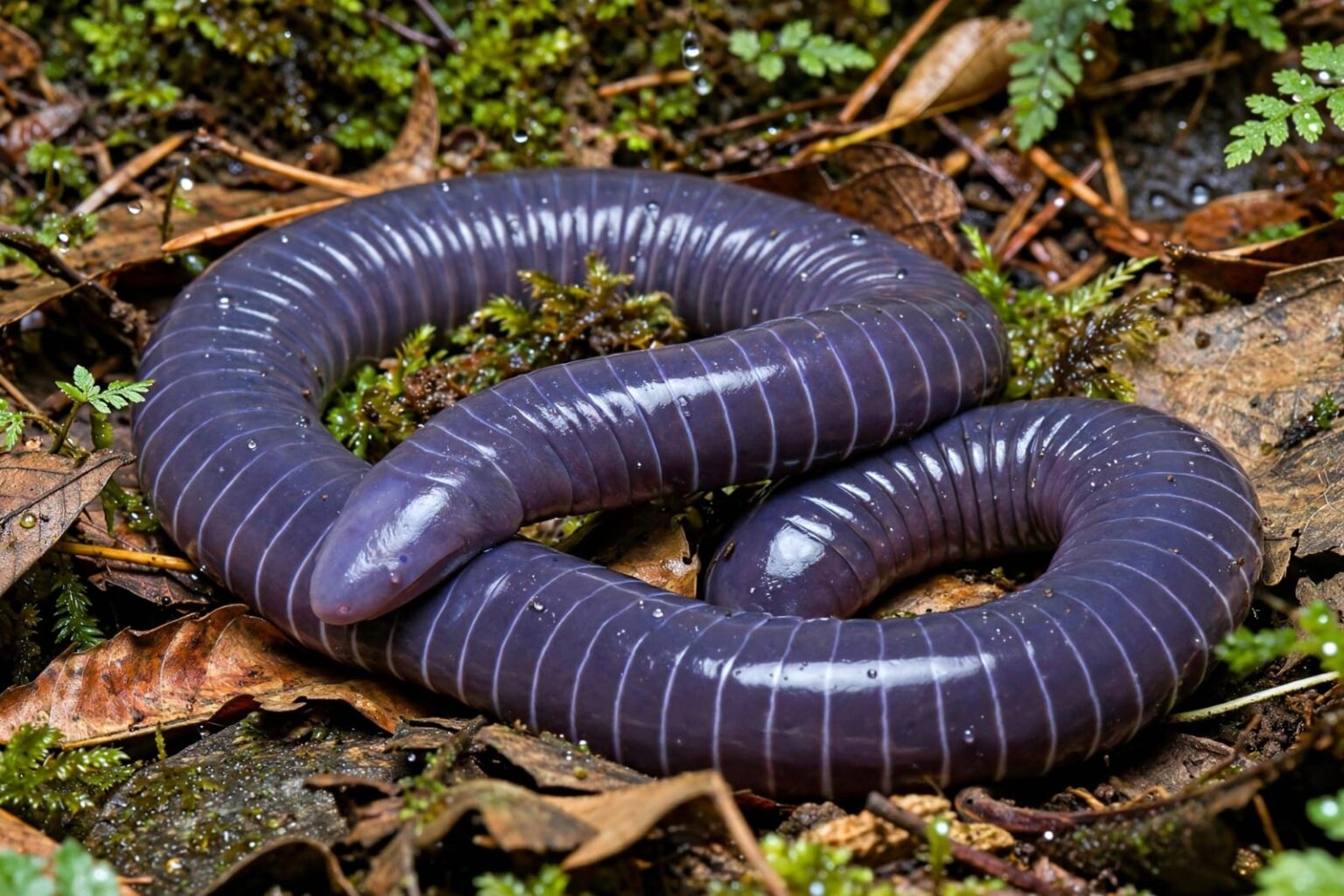

Scientists have discovered a new underground, legless amphibian species, named Gegeneophis chandgadi, in a village backyard within Maharashtra’s Western Ghats. The discovery—a result of collaborative research published in the Records of the Zoological Survey of India—highlights hidden subterranean biodiversity surviving outside protected zones and brings India’s total amphibian count to 458.
Environment Pulse Desk: In a groundbreaking initiative, a team of scientists has identified a new species of underground, legless amphibian in the northern Western Ghats of Maharashtra, adding fresh evidence of just how much biodiversity in the region remains undocumented.
The newly described species, Gegeneophis chandgadi, belongs to a group of amphibians called caecilians — strange, elusive creatures that spend nearly their entire lives beneath the soil and are frequently mistaken for earthworms or small snakes. It was discovered in Buzawade village, in the Chandgad taluka of Kolhapur district.
The discovery is the result of a collaboration between researchers from the Zoological Survey of India’s Western Regional Centre in Pune, Yashwantrao Chavan Mahavidyalaya in Halkarni, Savitribai Phule Pune University, and the Mhadei Research Centre in Goa.
The species was formally described in the Records of the Zoological Survey of India, based on specimens collected during field surveys conducted in August 2025. The name “chandgadi” is a nod to the local Chandgadi dialect of Marathi spoken in the Chandgad region, and researchers say it also recognizes the role local residents played in helping track down the secretive animal, drawing on their traditional ecological knowledge of the area.
What makes the find particularly notable is where it happened: the caecilian wasn’t discovered deep within a protected forest, but in a village backyard — tucked beneath decaying logs, organic waste, and bamboo leaf litter in a landscape shared by people, homes, and farmland. It’s a reminder that ecologically significant, hidden biodiversity can thrive even outside formally protected zones. Caecilians in the genus Gegeneophis, sometimes called blind caecilians, live almost entirely underground and are rarely seen.
- chandgadi has a worm-like body that ranges from flesh-coloured to dark brown, with a light pinkish head and a translucent, pinkish underside. Fully grown individuals measure roughly 105 to 185 millimetres, and the species can be distinguished by its distinctive body rings, or annuli — a key feature used in identifying caecilian species. To confirm it as genuinely new to science, researchers combined molecular analysis with detailed morphological and meristic studies. With this discovery, India’s count of Gegeneophis species rises to 12, eleven of which are found nowhere else in the world but the Western Ghats. The country’s total amphibian tally now stands at 458 species, 41 of them caecilians. The find underscores why continued surveys of soil and subterranean ecosystems matter in the Western Ghats — a globally recognized biodiversity hotspot that, even now, continues to yield species that have gone unnoticed until someone thought to look beneath the surface.
Also Read: India Pushes Fishermen Further Out to Sea in Bid to Tap High-Value Catch


