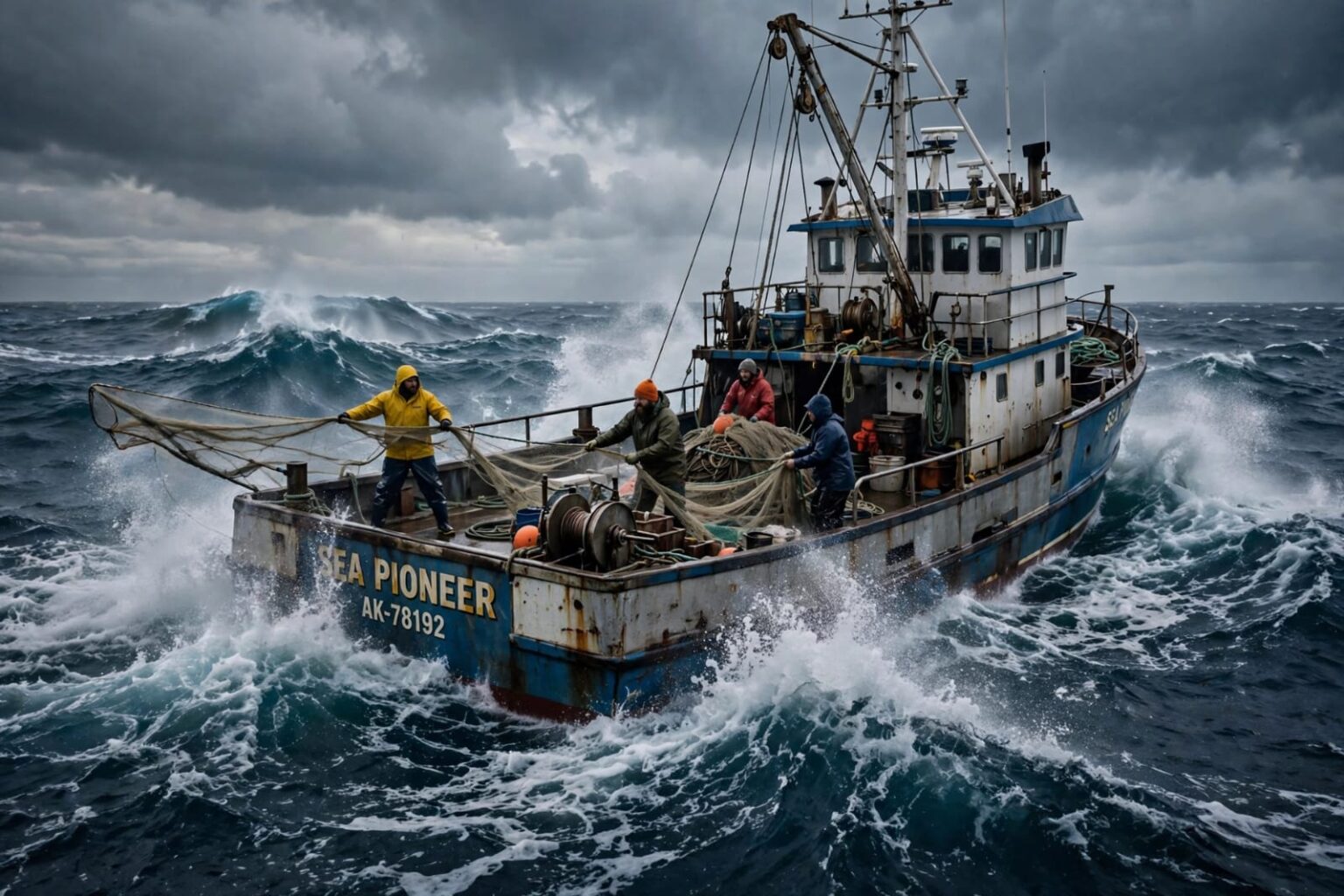

The Indian government is encouraging fishermen to move beyond coastal waters (40 to 50 nautical miles) to tap into lucrative, high-value catches like tuna in deeper ocean zones. A national workshop in Gandhinagar, Gujarat, organized by the Department of Fisheries, aims to engage stakeholders, supported by the new 2025 EEZ Rules, High Seas Guidelines, and digital Access Passes via the ReALCraft portal for vessels operating 12 to 200 nautical miles offshore.
Environment Pulse Desk: Most of India’s fishing fleet never strays far from the coast — sticking to waters within 40 to 50 nautical miles, even though the more lucrative catch, like tuna, tends to lie much further out. The government is now trying to nudge the industry into deeper waters.
On September 17, the Department of Fisheries will hold a national workshop in Gandhinagar, Gujarat, bringing together officials, industry players and fishermen to promote deep-sea fishing and talk directly with those already holding the permits needed to fish beyond India’s coastal waters.
Union Fisheries Minister Rajiv Ranjan Singh is expected to attend, along with Gujarat Chief Minister Bhupendrabhai Patel and Minister of State S.P. Singh Baghel. The event will also draw officials from coastal states and union territories, bodies like ICAR, CIFNET, NABARD, NCEL, NCDC, SEAI, MPEDA and EIC, and — notably — fishermen themselves, including women in the sector, along with holders of Access Passes and Letters of Authorization.
India’s coastline stretches close to 11,100 kilometres, and its exclusive economic zone covers roughly 2.4 million square kilometres of ocean, with an estimated fishing potential of 5.86 million tonnes. Nearly 5 million fishermen depend on the sector, which brought in close to ₹73,890 crore in seafood exports in the last financial year.
The problem, officials say, is that most of the fishing happens close to shore, leaving high-value species like tuna largely untapped further out. To change that, the government has notified new rules over the past year — the EEZ Rules and High Seas Guidelines of 2025 — along with a free digital Access Pass, issued through the ReALCraft portal, that lets fishermen, cooperatives and Fish Farmer Producer Organisations fish between 12 and 200 nautical miles from the coast.
The pass is mandatory for mechanised vessels and larger motorised boats over 24 metres, but traditional non-motorised and small-scale fishing craft are exempt, so smaller operators aren’t squeezed out. So far, about 9,650 Access Passes have been issued to applicants from coastal states and union territories.
The sessions are expected to cover the entire deep-sea fishing value chain — from the state of fish stocks and the need to modernise vessels, to training crews, arranging finance, and everything that happens once the catch is landed, including processing, traceability and meeting export standards.
Each session is expected to pair expert input with perspectives from fishermen and industry, followed by open discussion — an attempt, officials say, to surface the practical, on-the-ground problems holding the sector back, whether that’s financing, outdated boats, or gaps in market access.
The Fisheries Department has also been working to strengthen fishing cooperatives and Fish Farmer Producer Organisations, alongside a broader push to bring more of the sector’s operations online.
Whatever comes out of the discussions is expected to shape how the government fine-tunes its support for the industry going forward — from funding and skill-building to smoothing export procedures — as it tries to get more fishermen fishing further from shore.
Also Read: सिंगापुर का क्लाइमेट मिशन सवालों में, विकास के बीच कट रहे जंगल