


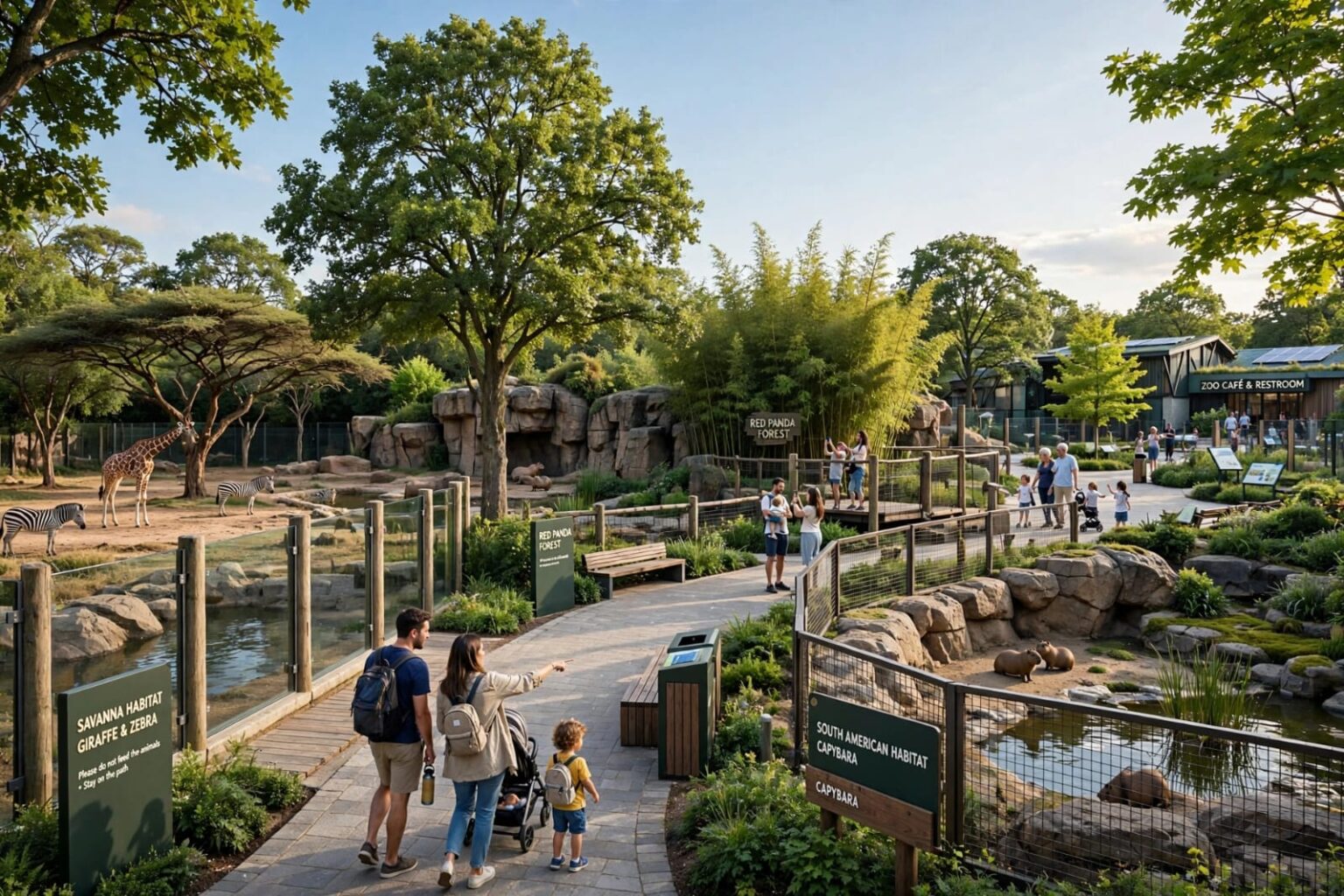

Nawab Wajid Ali Shah Zoological Garden (Lucknow Zoo) implements comprehensive seasonal measures—such as 48 sprinkler systems, 50 coolers, foggers, and adjusted summer/winter diets—to ensure the welfare of its animal residents.
Environment Pulse Desk: Walk through the Nawab Wajid Ali Shah Zoological Garden on a scorching May afternoon, and you’ll notice something beyond the usual sights of a city zoo — sprinklers hissing over the deer enclosure, mist drifting past the tiger paddock, coolers humming near the primate houses. Lucknow Zoo, now well over a century old, has quietly turned itself into a case study in how an old-fashioned urban zoo can take animal welfare seriously without waiting for a glossy redesign.
The summer routine is the part visitors notice first. Close to 48 sprinkler systems run across enclosures housing deer, tigers, giraffes and others, giving the animals regular cooling showers through the hottest hours of the day. Around 50 coolers keep lions, tigers, primates and other heat-sensitive species comfortable, and where machinery isn’t practical, older tricks fill the gap — khas mats, bamboo screens and green curtains shade birds and smaller animals from direct sun. The ponds in the waterbird section have been cleaned up and renovated for proper swimming, and foggers have joined the mix in the last few years. Even the animals’ meals shift with the season: herbivores get more watermelon, cucumber and leafy greens to keep them hydrated, carnivores’ portions are adjusted to ease the metabolic strain of the heat, and salt licks are kept out to help with electrolytes. Winter gets the same attention in reverse — straw bedding, heaters, blankets and windbreaks for everyone from chimpanzees to reptiles.
The zoo’s ambitions go beyond just weather-proofing enclosures, though. A Rs 1.91 crore eco-tourism project from the state Tourism Department has replaced a lot of the old infrastructure with bamboo furniture, seating clusters and gazebo-style rest spots that sit more naturally in the greenery and cut down on plastic and other non-biodegradable materials. A butterfly park, still taking shape, is being planted with nectar-rich species that will double as a genuine habitat rather than just a photo backdrop. Regular plantation drives — several done alongside the National Botanical Research Institute — and an active anti-plastic push round out the effort to keep the premises cleaner for animals and visitors alike.
None of this happens in isolation. Corporate partners have stepped in too — NTPC’s Northern Region headquarters, for instance, has backed the adoption of lions and Royal Bengal tigers and funded multi-tap water systems, building on earlier support for battery-operated vehicles and general facility upgrades. The zoo’s own Adopt-an-Animal programme lets ordinary citizens and institutions chip in toward an animal’s food, medical care or enclosure upkeep, which has done a fair bit to spread a sense of ownership beyond the zoo staff. On the veterinary side, monitoring has become more rigorous, and enrichment activities are now built into daily care so animals get to behave more like they would in the wild.
There’s a research and conservation angle too. The zoo has had some success breeding species like swamp deer and blackbuck in captivity, and it runs public education programmes alongside that work. Between the attention to soil and water management, the reduced plastic footprint and the climate-adapted enclosures, Lucknow Zoo makes a decent case that a working zoo can look after both its animals and its environment at the same time.
For visitors, the result is a place that feels more alive than the typical concrete-and-bars zoo — somewhere the animals seem genuinely looked after, and where the city’s green lung keeps doing double duty as a home for wildlife.
Also Read: New Legless Amphibian Species Discovered in Maharashtra’s Western Ghats