


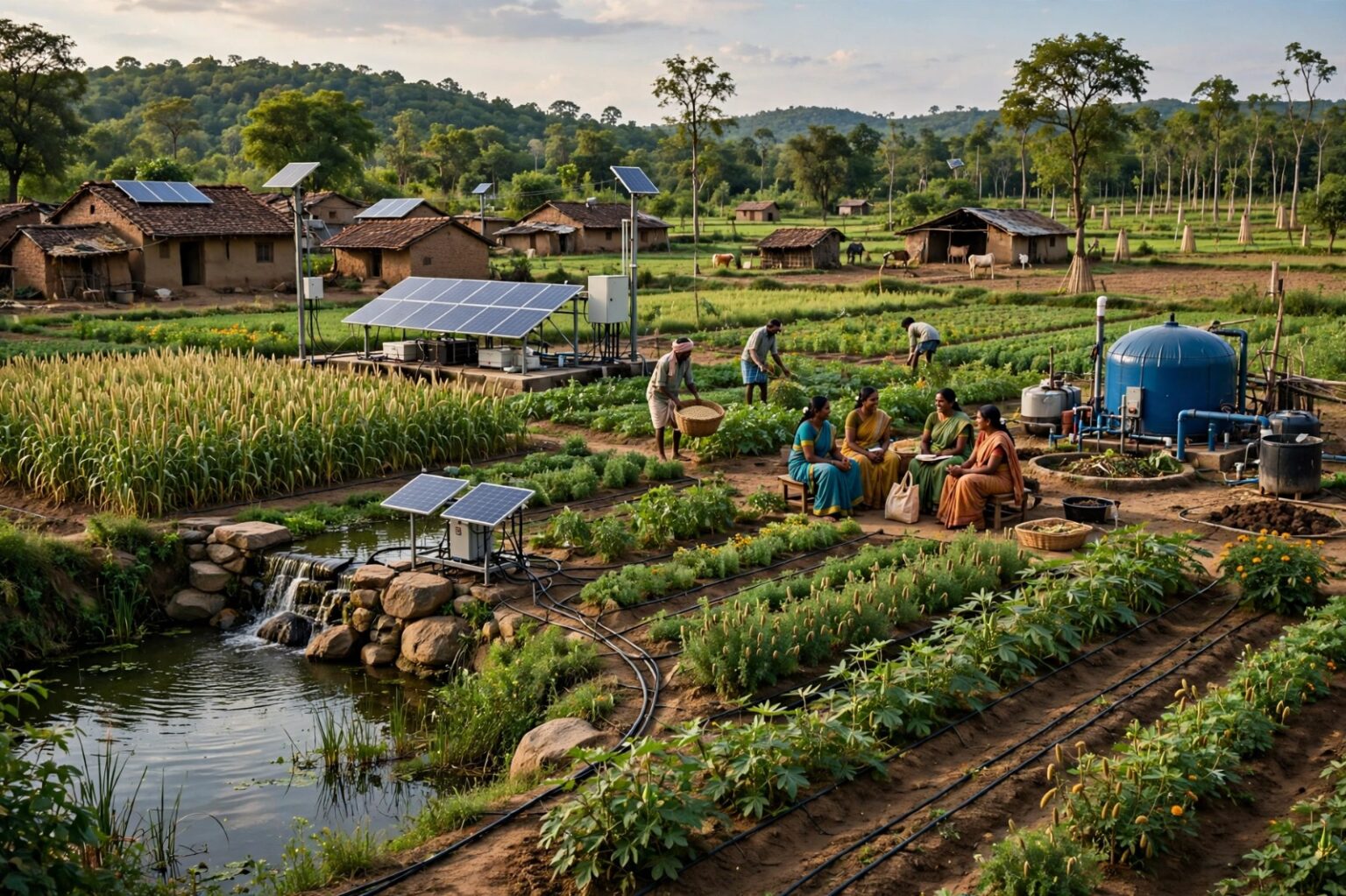

Rural communities in India, where nearly two-thirds of the population resides and relies on farming, are actively combatting the severe impacts of climate change by blending traditional wisdom with modern technology, government initiatives, and grassroots ingenuity. To secure their livelihoods, farmers are adopting climate-resilient seeds (such as drought-tolerant millets and heat-resistant wheats) and practicing crop diversification, agroforestry, and organic farming to protect soil health and income.
Environment Pulse Desk: In the rural areas of India, nearly two-thirds of the total population resides. The majority of these individuals rely on farming for their livelihoods. Because of the effects of climate change (such as rising summer temperatures, irregular monsoon rains, extended periods of drought, unexpected flooding, and changing pest behavior) the risks associated with rain-fed agriculture as a source of income are increasing. However, rural communities are not simply sitting back and watching. Rather, people living in villages across numerous states are combining traditional knowledge with modern technology, government resources, and simple ingenuity to adapt to the changing conditions.
The largest amount of changes are occurring in farming. Farmers are beginning to use climate resilient seeds that have been developed at institutions such as the Indian Council of Agricultural Research. These seeds include: drought tolerant millets; short duration paddies; heat resistant wheats; and flood tolerant rices. In addition, many families are no longer relying solely on a single crop. Many families now grow pulses, oilseeds and vegetables along with cereal grains, or they may plant trees within their crops. Growing multiple crops allows for the soil to retain moisture, promotes biodiversity and provides a backup source of income for the family if their primary crop fails. Additionally, zero budget natural farming and organic farming techniques, supported by state programs in Andhra Pradesh, Himachal Pradesh and other areas, are assisting farmers in reducing the expense of using chemicals. Chemicals are becoming increasingly expensive due to the effects of climate change.
The other major concern is water. Through the MGNREGA program, local communities have constructed check dams, farm ponds, contour trenches and other water storage facilities that capture the monsoon runoff before it is lost. Additionally, existing tanks and wells have been rehabilitated and rainwater harvesting methods have helped to increase the level of ground water in certain areas of Rajasthan, Maharashtra and Gujarat. Drip and sprinkler systems are utilized in order to conserve water significantly better than conventional irrigation methods. Furthermore, if these systems are powered by subsidized solar pumps, farmers will receive reliable day-time electricity and no longer need to burn diesel.
The availability of energy is evolving as well. For example, the use of solar streetlights, household lighting systems, and mini-grids in villages results in a reduction of kerosene and diesel. Families have access to clean cooking fuel and nutrient-rich slurry for their fields from biogas plants that are powered by cattle dung and agricultural waste; this reduces both indoor smoke and greenhouse gases. Women’s self-help groups manage these systems in many states and have created job opportunities within those communities.
Village Forest Committees and Joint Forest Management Programs also receive focus. These organizations use native tree species to anchor soils, prevent erosion and capture carbon. To maintain moisture during droughts, organic material is added to soils via composting, green manuring and biochar. Livestock producers are also making an impact by selecting more resilient breeds of livestock, improving feed management practices and constructing shelters that will protect animals from extreme weather conditions.
Government schemes are the majority of what makes up the backbone. These schemes include the National Mission for Sustainable Agriculture, Paramparagat Krishi Vikas Yojana, and National Adaptation Fund for Climate Change, which allocate funding to education, facilities, and insurance. Farmers receive weather-based crop insurance and mobile advisories that offer them up-to-date forecasting and advice on how to make changes to their planting schedule or protect a crop from being destroyed. Early warning systems for cyclones and floods, as well as community disaster committees, have reduced deaths caused by disasters in low-lying coastal and flood-prone regions.
This isn’t easy. Getting credit is difficult; land holdings are small and scattered, and extension services are inconsistent; all of these things make it more difficult for farmers to adopt improved practices. However, there are signs that things are improving. Many villages now have a larger variety of income generating activities; they also have reliable access to clean water and energy that helps protect their families from the effects of climate change. The main point to take away from rural India is that adaptation works best when it addresses local concerns first and then has the support of policies and technologies. This will help preserve both livelihoods and the environment.
Also Read: Has Hollywood Done Enough to Address Climate Change?