
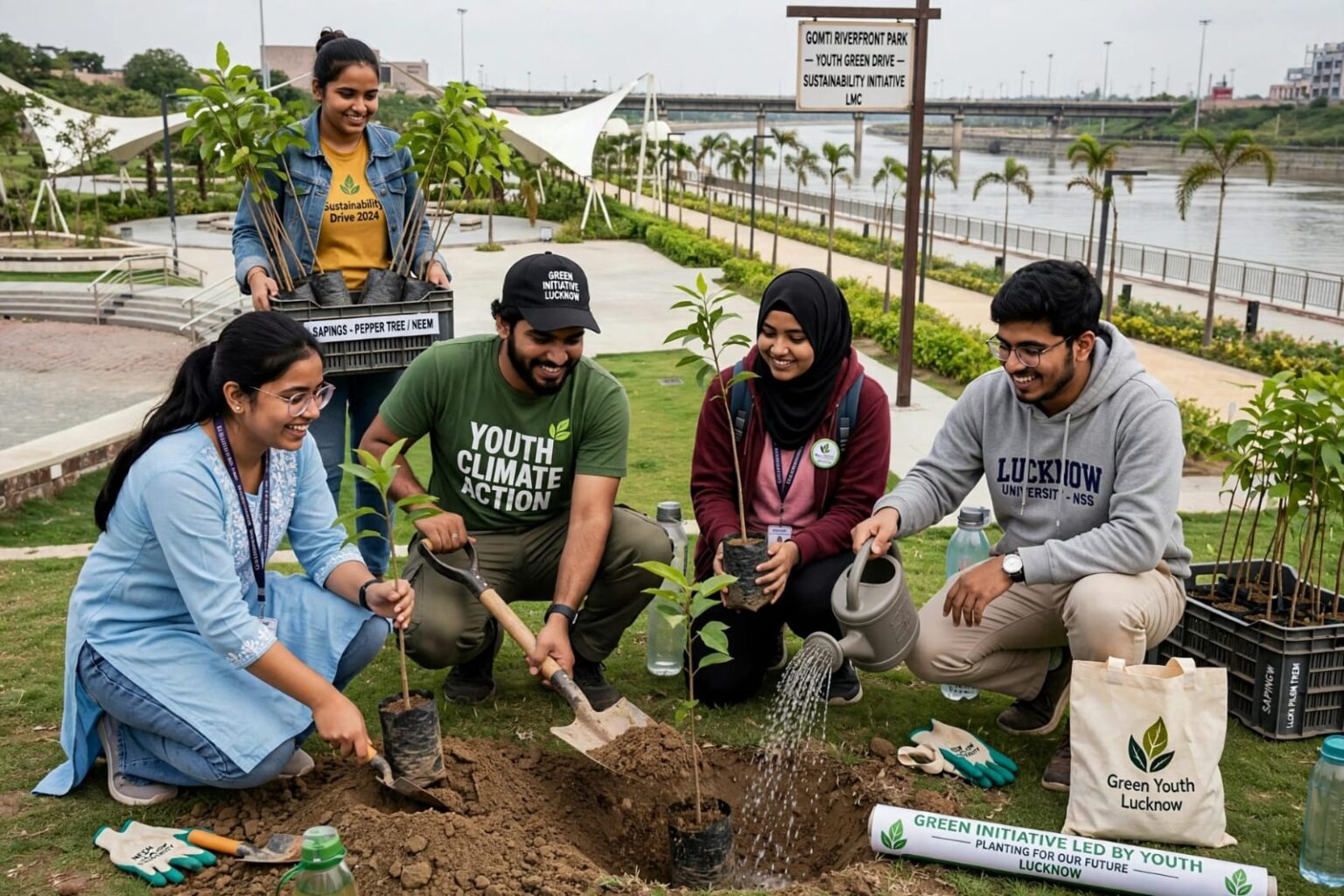

Youth-led green initiatives are driving monumental global change through grassroots action, advocacy, and innovation. From Greta Thunberg’s pioneering school strikes that influenced political landscapes and international negotiations (such as the Loss and Damage fund) to massive coordinated efforts like UNICEF’s Green Rising—which has engaged millions of youth across dozens of countries—young people are delivering measurable environmental results. These initiatives encompass planting millions of trees, conserving massive volumes of water, managing waste, and deploying local solutions like coral restoration in Pakistan and electric mobility in Liberia. Beyond generating tangible environmental and economic impacts by building green skills and green jobs, youth-driven activism helps combat climate anxiety, proving that young leadership is vital for shaping a sustainable future.
Environment Pulse Desk: Young people across the globe are starting monumental change by taking climate action into their own hands — but what does it mean to lead green initiatives?
Youth-led green initiatives are producing tangible and incontrovertible results ranging from changes in public perceptions brought about by school strikes to the restoration of ecosystems and creation of local jobs through community projects.
This involves advocacy, direct action, innovation and entrepreneurship. Each year they plant millions of trees, save billions of liters water, reduce waste in the tons and inspire elections & policy while building skills for living a more sustainable tomorrow.
From individual acts of defiance to structured movements, these have now shown real environmental, social and economic impact.
Securing Fridays for Future: From Strikes to System-wide influenceThe movement of youth climate action in its contemporary form burst onto the world stage on August 20th, 2018 when Greta Thunberg first protested outside Sweden’s parliament as a solitary figure.
School strikes soon crossed continents. Millions were either involved in coordinated actions of this kind, with hundreds taking place in September 2019 alone. Later, studies demonstrated that translate to real-world political impact. Germany – Local participation in Fridays for Future protests was associated with larger Green Party vote shares at the next elections.
Establishing causal relationships between protest activity and the party’s actual electoral success is more difficult, but studies suggest that activism could help account for a substantial share of those gains — through mechanisms such as reverse intergenerational influence (with children persuading parents) or enhanced climate messaging from politicians and media. International negotiations also were influenced by these movements.
Campaigners focused attention here, as with loss and damage — a clear space where the pressure from youth activists on funding this agenda further contributed to ensuring funds now exist but remain unfulfilled. Climate justice, intergenerational equity and fossil fuel phase-outs norms crystallised more definitively into mainstream discourse.
Mass strikes may have receded from vision after peak years, but the ideas and networks generated by this organization were alive an well; many catalyzed into more durable forms of organizing.
Scaling Grassroots Action: The Green Rising and BeyondOne of the most ambitious co-ordinated efforts is that of UNICEF´s Generation Unlimited And partners called Green rising. Initiated with the aim of mobilizing millions of youth to take concrete climate action, it had already engaged over 11 million young people in 30 countries by late-2024.
Earlier reports suggested 277 lakh people had taken part. Some of the results documented include approximately 19.8 million trees, a water saving capacity of over 14,7000Mm3 and close to151000kg (150 tons) waste managed or recycled. Country-level examples illustrate the reach.
In Rwanda alone, youth engaged in revised national community service days (Youth Umuganda) and related initiatives have planted over 730,000 trees starting with more than 11K at a launch event in one district.
The #EntreNoClima movement in Brazil mobilized 382,000 young people through climate action clubs in over 759 municipalities; they closed open-air dumps, restored sites with saplings and removed thousands of kilograms of waste while promoting reduction on single use plastics and energy consumption.
Millions of young people in India engaged through clubs, camps and community groups across some 35 states focused on serious water conservation training expected to see large numbers participat e (500K aiming for 7.5M) reaching tens of billons liters saved by consoidating commitmens into just half a liter each per family household.
These figures encompass more than tree-planting events. These include but are not limited to digital mapping of waste hotspots, circular economy micro-enterprises (e.g. turning plastic bottles into valuable products), solar installations and advocacy that impacts local governance issues.
Local people, Local solutions
Youth start-ups develop local solution to the most immediate problems. Pakistan has seen the emergence of a young people-led Reef Revival Initiative that works in partnership with fishers, students and Indigenous peoples to establish coral nurseries using natural regeneration processes combining science and traditional knowledge. The approach has been acknowledged within the UN Ocean Decade programs. Youth-led electric mobility projects in Liberia are not running traditionally polluting vehicles, but eliminating them entirely with fleets that save on operational costs and dramatically reduce CO₂.
For example, the circular solar systems in Colombia and other contexts in Latin America use second life electric vehicles as a power source for lighting (off-grid homes), classrooms, or coronavirus vaccine cold storage installations which serve to remote communities. Similar patterns emerge in Africa and Asia.
As an example, beekeeping projects initiated by youth who restore pollinators as well as sustains their livelihood, automated street lighting system to minimize power wastes; water purification and other (solar-powered) waste-to-value enterprises and promote school-based tree planting at scale while also developing skills in greening.
Teenager-led organizations like Minnesota’s Green Crew clean up litter, restore habitats, remove invasive species, monitor water quality and plant trees with hundreds of volunteers and thousands of participants each year.
These projects not only offer concrete local benefits, but they also help youngsters deal with climate anxiety by directing that emotion into action. Green Skills, Green Job and Resilience Building a Solid Impact Enable youth-led initiatives that drive pathways into the green economy.
The programs involve training participants in project planning, climate finance, digital mapping and publication and presentation of proposals/topic ideas on agroforestry practices composting practises as well entrepreneurship plans etc. In regions facing high youth unemployment, the growing networks of waste buy-back centers, circular micro-enterprises and clean cooking solutions provide livelihoods while addressing deforestation and pollution.
Results are enhanced with education and awareness components. The eco-learning circles, school climate clubs and competitions make students teachers for their classmates, families and neighborhoods. Other projects revive forests through culturally-appropriate practices or create indigenous tree nurseries that involve hundreds of children and families.
Some have even chosen to conduct disaster risk reduction training so that schools and communities are more resilient to extreme weather events. Psychological benefits matter too. Research and accounts of people actively engaging in constructive action suggests this decreases their feelings of helplessness around climate anxiety. Young people grow in hope and agency when they design, lead, and get good results from projects.
Tens of thousands have signed advocacy campaigns which, ever since 2013 when IC has started the campaign on air pollution and coal subsidies in Pakistan, led to parliamentary debates (either about) such issues but also as a result of continued campaigning against environmentally-damaging projects they are sometimes delayed or cancelled. Locally and in their communities, youth have closed down dumps, restored wetlands or urban green spaces as well as created advocacy for improved waste management systems. Together these efforts lower the bar for sustainability, grab more media and political attention on climate issues, and widen the circle of people who regard environmental protection as important.
Barriers must be overcome. Most youth-led groups work in an underfunded context, lack access to decision-making spaces and have met political opposition or narratives of climate delay. Unequal access to climate finance, and especially for grassroots actors in the Global South Providing sustained energy beyond initial exposure relies upon continuous aid, guidance and organizational opportunities.
Yet the trajectory is clear. The reforestation prunes that first planted in school strikes have become networks rolling out trees flat, cleaner water, lower emissions, restored environments & green livelihoods and public / political changes. Youth leadership with the backing of trust and resourcing from organizations, governments see faster locally relevant results.
Pointing Out to Age That Impact Has No Barrier: Youth-Led Green Initiatives Through the marriage of moral clarity, practical innovation and community organizing for collective action young people are healing landscapes, rebuilding economies & holding powerful forces to account. Their work is already covering millions of participants, and delivering measurable environmental impact.
As these efforts expand even further—with improved financing, policy inclusion and intergenerational partnership—the effects will only multiply. The generation most likely to face the effects of climate change longest from now on is also, day in and day out, showing us how solutions can be constructed bottom-up.
Also Read: There is Serious Momentum for Lucknow’s Green Campus Movement