


Green startups are fundamentally transforming global business by proving that sustainability and profitability go hand in hand, backed by record energy transition investments. Innovators are revolutionizing the energy grid through enhanced geothermal energy, long-duration battery storage, and advanced nuclear tech. Simultaneously, startups are converting industrial pollution into valuable products, pioneering zero-carbon cement, scaling carbon capture, and deploying AI-driven solutions across transportation, agriculture, and urban management. As major corporations adapt through strategic acquisitions and sustainable business models, green tech is rapidly shifting from an alternative niche into the mainstream economy.
Environment Pulse Desk: There’s a particular kind of company that doesn’t announce itself with fanfare. It doesn’t promise to disrupt an industry in the way a slide deck might claim; it simply starts doing something an incumbent assumed was impossible — drilling deeper for heat, capturing carbon out of thin air, turning industrial exhaust into fuel — and a few years later, the rest of the industry is scrambling to catch up or buy in. That’s more or less the story of green startups right now: less a single dramatic moment, more a slow accumulation of proof that sustainability and profit aren’t actually in tension.
The scale of money moving toward this idea is hard to dismiss. Global energy transition investment hit a record $2.3 trillion in 2025, holding up even against a backdrop of geopolitical noise that might have been expected to spook capital elsewhere. Green revenue lines at publicly listed companies have been growing at roughly twice the pace of conventional business segments, and within the energy sector that gap widens further. Investors have noticed, too — companies with meaningful green revenue tend to command higher valuations and find it easier to raise capital. That’s not idealism; that’s just where the money increasingly wants to go.
Rewiring the Grid From the Ground Up
Energy is where this shift is most visible, largely because energy touches everything else. For decades, the pitch for renewables came with an asterisk: solar and wind are clean, but intermittent — great when the sun’s out, less useful for keeping a hospital or data centre running at 3 a.m. A wave of startups is chipping away at that asterisk from several directions at once.
Enhanced geothermal companies like Quaise Energy and Fervo Energy have essentially borrowed drilling techniques from the oil and gas industry and pointed them somewhere more useful — deep underground heat that’s been sitting there, largely untapped, because nobody had the tools to reach it economically. Fervo in particular has moved from proof-of-concept to large-scale projects and raised serious capital along the way, positioning geothermal as something utilities and data centre operators can actually plan around, rather than a promising footnote in a research paper.
On the storage side, Form Energy is working on batteries built to hold power for days rather than hours — the kind of duration that could genuinely resolve the intermittency problem that’s dogged renewables for years. Elsewhere, nuclear startups are chasing smaller, safer reactor designs suited to remote sites or single industrial facilities, while a quieter set of companies is going after the demand side of the equation: sensors, AI-driven building management, and heat pumps capable of delivering the kind of high-temperature heat that heavy industry actually needs, an area that’s historically been a stubborn source of emissions.
None of this is happening in a vacuum. Utilities and heavy industrial players are responding — sometimes by partnering, sometimes by simply acquiring the startups outright — because building this kind of innovation in-house, at the pace the market now expects, isn’t realistic for most incumbents. New business models are emerging alongside the technology itself: virtual power plants, community battery storage, and demand-response arrangements that treat flexibility as a resource in its own right.
Turning Pollution Into a Product
If energy is about generating power more cleanly, another whole category of startups is asking a different question: what do you do with the mess that’s already been made? Climeworks has scaled up direct air capture facilities, essentially pulling carbon straight out of the atmosphere and packaging it as high-quality credits for corporations trying to offset what they can’t yet eliminate. LanzaTech takes a more industrial angle, recycling carbon from factory off-gases and biomass into usable products — effectively treating a smokestack’s emissions as raw material rather than waste. Similar logic is being applied to municipal and agricultural waste streams, converting what would otherwise sit in a landfill into low-carbon fuels and chemicals.
That same instinct — pollution as feedstock rather than liability — shows up in materials and manufacturing too. Brimstone Energy is going after zero-carbon Portland cement, tackling a material responsible for a genuinely enormous share of global emissions almost by default, simply because there hasn’t historically been a serious alternative. Elsewhere, AI-powered sorting systems are getting better at pulling valuable material out of mixed waste streams, addressing an uncomfortable truth: most plastic produced globally is never actually recycled in any meaningful sense. Circular economy startups are also stretching product lifespans through repair, refurbishment, and sharing models, while others are converting food and agricultural waste into fertilizer, bioplastics, or energy.
The business logic here is straightforward once you see it: the old “take-make-dispose” model is quietly turning into a liability, as regulation tightens and raw material costs climb. Companies proving there’s a viable alternative aren’t just doing good — they’re opening entirely new revenue lines out of what used to be a cost center, which is exactly the kind of argument that gets a board’s attention.
Wheels, Fields, and Cities
Transportation is following a similar arc, and not just in the electric passenger car market that tends to dominate headlines. The harder, less glamorous work is happening in heavy-duty applications — electric or alternative-fuel trucks, ships, and aviation fuel synthesized from captured carbon and renewable hydrogen. Battery recycling startups are recovering the critical minerals locked inside old batteries, chipping away at the industry’s reliance on new mining and building supply chains that don’t depend on geopolitically fragile sources.
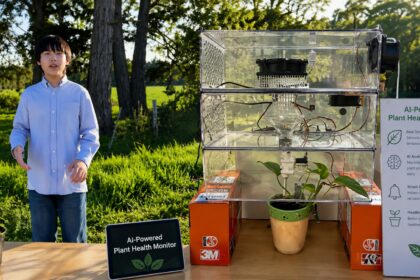
Agriculture is undergoing its own quieter transformation. Startups are deploying AI, sensors, and controlled-environment techniques to cut water use, waste, and methane emissions on farms, while vertical farming and precision tools ease pressure on land and reduce chemical inputs. Food waste redistribution platforms are turning surplus into something usable rather than letting it decompose into landfill methane — a problem that’s both an environmental and food-security issue at once.
Cities, meanwhile, are becoming testbeds for a different kind of green tech: AI systems that spot wildfires early, optimize garbage collection routes, monitor deforestation for compliance purposes, and manage energy loads across a grid under increasing strain from heat and extreme weather. Some startups are even finding ways to turn underused urban land into community battery installations — quietly productive infrastructure hiding in plain sight.
Old Companies, New Playbooks
What’s perhaps most interesting is how incumbents are responding — not always with resistance, but often with a kind of pragmatic adaptation. Many large firms have adopted “venture client” models, essentially testing startup technology inside their own real-world operations before committing further, which lets sensor companies scale water-saving systems across global manufacturing sites or recycling innovators work their way into automotive and electronics supply chains.
Business models themselves are shifting shape. Subscription-based approaches — energy-as-a-service, product-as-a-service — are aligning company incentives with durability and efficiency rather than sheer volume of sales, a fairly fundamental rewrite of how a manufacturer thinks about success. Data and AI platforms are also turning what used to be a compliance chore — emissions and resource reporting — into something closer to a strategic tool, letting companies find cost savings they wouldn’t otherwise have noticed.
None of this comes without friction. Scaling capital-intensive hardware still requires patient investors and consistent policy support, something that’s not guaranteed given how quickly political priorities can shift. Some sectors are running into real constraints around critical materials and skilled labour, and the risk of greenwashing means verification and transparency matter more than ever — claims without evidence don’t hold up for long in a market this closely watched.
Even so, the direction of travel looks fairly settled. Data centres’ appetite for reliable, clean power is pulling geothermal, advanced nuclear, and long-duration storage further into the mainstream. AI is proving useful not just as a product but as a tool for ecological monitoring and materials discovery in its own right. Corporate net-zero commitments keep expanding the addressable market for all of this, and investors are betting on more public listings and larger funding rounds for the sector’s more mature players.
What green startups are really demonstrating, one drilling rig or carbon capture plant at a time, is that sustainability was never actually a cost to be minimized — it was a market nobody had built the tools to serve yet. The tools exist now. The rest of the economy is left deciding how quickly it wants to catch up.
Also Read: Clay, Not Chemicals: How Ganesh Chaturthi Learned to Let Go Gently