


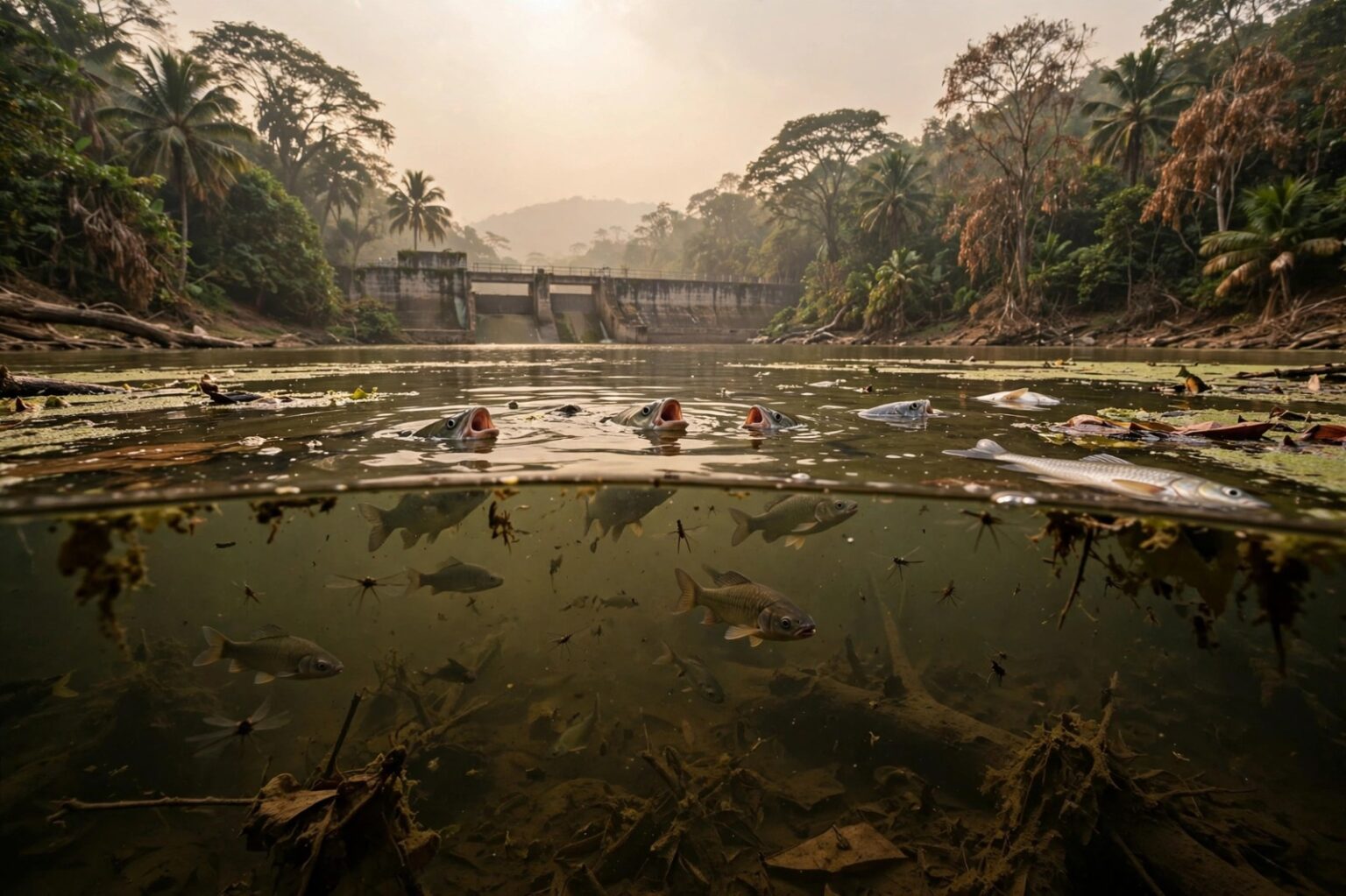

Rising temperatures are causing a global decline in river oxygen levels, threatening aquatic life, ecosystems, and millions of people who depend on freshwaters. Driven heavily by climate change, warming waters, heatwaves, and human infrastructure like dams, studies project further oxygen loss and increased low-oxygen days through the 21st century unless greenhouse gas emissions and pollution are sharply reduced.
Environment Pulse Desk: In many parts of the world, rivers are losing the oxygen necessary for fish and other water-dwelling organisms to live, and scientists believe that this is due to rising temperatures.
In a large-scale study published in the journal Science Advances, researchers used satellite measurements of dissolved oxygen levels in over 21,000 different sections of rivers from 1985 through 2023. On average, the dissolved oxygen level decreased by approximately 0.045 mg/L each decade. Of the rivers examined, nearly 79% experienced some degree of decrease; and about one-third of the decreases observed were substantial enough to be considered statistically significant. The worst affected areas included tropical rivers, particularly those located within 20 degrees south and 20 degrees north of the equator. Many of the rivers in this region are found in India and South America.
Fish, insects, and bacteria rely upon dissolved oxygen to survive. Low levels of dissolved oxygen may lead to “dead zones” in portions of a river system where many species cannot exist. The research demonstrated that as the temperature of water increases, so does its ability to hold less oxygen, and this phenomenon accounted for approximately 63% of the total decrease in oxygen. In addition, heatwaves alone were estimated to account for 22.7% of the loss in oxygen during the past forty years. Furthermore, alterations in the way river ecosystems operate contributed to the decline in oxygen; as did dams, as shallow reservoirs can accelerate the reduction of oxygen.
The highest degree of harm was experienced in South America, where 86.4% of the length of all rivers was affected. If the Earth continues to heat up, then India, the southeastern part of the United States and regions of the Parana Plateau may experience a greater decrease in oxygen levels. Depending upon how much greenhouse gas is emitted into the atmosphere throughout the remaining decades of the 21st century, the total amount of oxygen that exists in all rivers globally will decrease by approximately 1.1% if emissions remain low and up to 4.7% if emissions increase. Additionally, in certain areas, the drop in oxygen may exceed 12%.
A second modeling study on the subject (Utrecht University), published in Nature Climate Change, indicates the same direction. The authors estimate that climate change will increase by about 8.8 additional days of low-oxygen per decade on average across the world from 2020 through 2100. They believe that large river systems like the Amazon and Congo, as well as basins in Central Europe and the eastern U.S., will be most impacted.
The issues go farther than simply killing off fish. When oxygen levels drop, nutrient movement within the water is affected, as are the relationships between organisms in a food web. Low oxygen also increases the amount of greenhouse gas released from the bottom sediments of a river. This means that for those millions of individuals that depend upon rivers for sustenance, drinking water, and financial support, the risk of negative impacts continues to grow.
Scientists say that the best way to prevent the continuing loss of oxygen from our freshwaters is to reduce greenhouse gas emissions. They have also called for improved controls on nutrient pollution, smarter dam management, and additional restoration of rivers. If we do nothing to address these problems, the silent loss of oxygen in our freshwaters may be one of the least recognized threats facing the world’s freshwater organisms.
Also Read: Global Climate Litigation Passes 3,099 Cases as Landmark Court Opinions Reshape the Field