


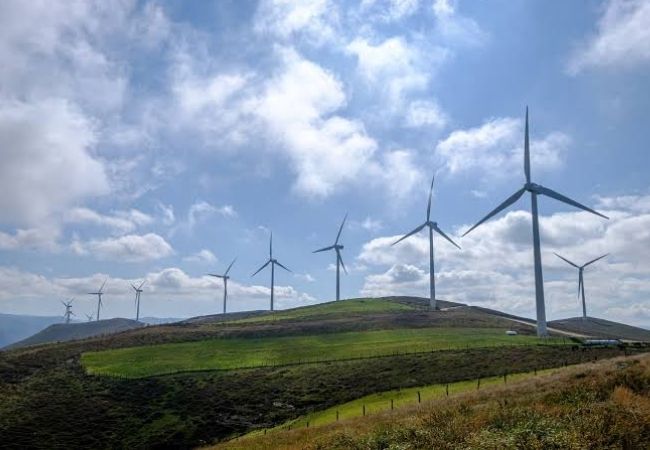

In 2025, clean energy fully met the growth in global electricity demand, leading to a structural decline in fossil fuel power generation. Renewables accounted for ~34% of global power generation, surpassing coal (33%) for the first time in modern history.
Environment Pulse Desk: The climate crisis is being driven largely by rising levels of CO₂ and other greenhouse gases pumped into the atmosphere by energy production, transportation, industry, and agriculture — with far-reaching consequences for ecosystems, weather patterns, sea levels, and human societies. But green technology is increasingly proving to be one of the most powerful tools we have to push back against it, rapidly displacing fossil fuels and enabling a broader shift toward low-carbon systems.
This isn’t just theoretical anymore. The numbers from 2025 tell a striking story: clean power sources met the entirety of global electricity demand growth that year, fossil-fuel electricity generation dipped for the first time as part of a genuine structural shift rather than a one-off blip, and renewables overtook coal to become the world’s single largest source of electricity generation.
Renewables Are Now Doing the Heavy Lifting
Solar and wind power have become the backbone of the world’s mitigation efforts. Solar generation alone grew by a record-breaking 636 terawatt-hours — roughly 30% — in 2025, covering about three-quarters of the increase in global electricity demand. Combined, solar and wind met almost all of that demand growth. As a result, renewables now make up around 34% of global electricity generation, edging past coal’s 33% share for the first time in modern history.
New capacity additions hit record territory too, somewhere between 692 and 800 gigawatts in 2025, with solar responsible for the bulk of it — over 500-600 GW — and wind contributing a substantial share on top of that. By the end of the year, total renewable capacity had climbed to roughly 5 terawatts, nearly half of all global electricity capacity. And the economics keep getting better: solar PV and onshore wind are now frequently the cheapest sources of new electricity available, often 40-50% less expensive than building new fossil fuel plants.
The cumulative effect of all this growth is hard to overstate. Since 2000, the expansion of wind and solar has kept fossil-fuel electricity generation about 30% lower than it otherwise would have been, and emissions around 28% lower. Looking at clean technologies more broadly — solar, wind, nuclear, EVs, and heat pumps — deployment since 2019 avoided over 35 exajoules of fossil fuel demand in 2025 alone, equivalent to roughly 7% of global fossil fuel use, and prevented around 3 billion tonnes of CO₂ emissions, about 8% of the global total. To put that in perspective, the coal demand avoided through this shift alone rivals India’s entire coal consumption in some comparisons.
Even as electricity demand keeps climbing — driven by electrification, cooling needs, industrial growth, and data centers — the emissions intensity of power generation has been falling year over year. In the EU, solar and wind have already overtaken fossil fuels as the dominant source of electricity. And much of this global scale-up has been driven by China, which has hit its wind and solar targets ahead of schedule and continues to lead the world in new installations.
Storage and Smarter Grids Are Closing the Gap
One of the longstanding knocks against solar and wind has been their intermittency — but that’s changing fast thanks to rapid advances in battery storage and grid technology. Battery storage additions jumped roughly 40% in 2025 by some estimates, climbing into the tens of gigawatts annually and becoming one of the fastest-growing segments of the power sector. As battery costs continue to fall, solar-plus-storage setups are becoming genuinely competitive for round-the-clock power in sunnier regions, in some cases undercutting new coal plants or even nuclear.
Smart grids and demand-side management are adding another layer of efficiency, helping match supply with demand in real time, cutting down on wasted renewable output, and making it easier to plug in distributed resources like rooftop solar, home batteries, and vehicle-to-grid systems. Without this kind of flexibility, there’d be a hard ceiling on how much renewable energy a grid could handle reliably — with it, that ceiling keeps rising.
Electrifying Transport, Buildings, and Industry
Green technology’s impact isn’t limited to how electricity gets generated — it’s also transforming how that electricity gets used. Electric vehicle sales have surged into the tens of millions annually, now accounting for more than a fifth of global car sales, steadily chipping away at oil demand. Heat pumps are doing something similar in buildings, offering a far more efficient alternative to fossil-fuel heating.
As power grids get cleaner, the benefits of electrification compound — driving an EV or running a heat pump becomes less carbon-intensive over time simply because the electricity behind it is cleaner. Industry is following a similar path, with electrified processes, high-efficiency motors, and industrial heat pumps reducing reliance on fossil fuels. Green hydrogen, produced by using renewable electricity to split water, is also emerging as an option for sectors that are notoriously hard to decarbonize — like steel, chemicals, and heavy transport — though it’s still in the early stages compared to how far solar and batteries have come.
Efficiency: The “First Fuel”
Sometimes overlooked in favor of flashier technologies, energy efficiency is often described as the “first fuel” — and for good reason. Better insulation, more efficient appliances, LED lighting, smarter industrial processes, and digital controls all reduce how much energy is needed in the first place. That means less new generation capacity required and immediate emissions cuts. Paired with renewables, efficiency remains one of the most cost-effective ways to cut emissions, and there’s still enormous untapped potential in buildings and industry through smarter design and operations.
Cleaning Up What’s Left
Prevention will always be the priority, but some emissions are simply harder to avoid. That’s where technologies like carbon capture, utilization, and storage (CCUS), along with direct air capture, come in — tackling residual emissions and even legacy CO₂ already in the atmosphere. Bioenergy paired with carbon capture, along with other nature-based hybrid approaches, can go a step further and deliver genuinely negative emissions. Methane detection and capture technology is also gaining ground, targeting a greenhouse gas that’s especially potent in the short term and comes largely from agriculture, landfills, and fossil fuel infrastructure. Meanwhile, innovations like low-carbon concrete, lab-grown alternative proteins, and advanced recycling are helping cut emissions tied to materials and food systems.
On top of all this, AI, satellite monitoring, and data analytics are quietly amplifying the impact of these physical technologies — sharpening climate models, optimizing where renewables get built and how they’re run, spotting emissions leaks, and improving efficiency in agriculture.
The Bigger Picture
The benefits of green technology extend well beyond emissions reductions. Cutting back on fossil fuel combustion means cleaner air and better public health outcomes. Reduced reliance on imported fuels strengthens energy security. The sector has created millions of jobs, and it’s helping stabilize energy prices over the long run. Investment reflects this momentum — clean energy funding has surpassed $2 trillion annually in recent years, often outpacing investment in fossil fuels.
That said, the picture isn’t all positive. Global emissions are still rising overall, just more slowly, because demand growth — particularly for electricity — and incomplete transitions in developing economies and hard-to-abate sectors are still outrunning the reductions happening elsewhere. Real bottlenecks remain: aging grid infrastructure, slow permitting processes, strained supply chains for critical minerals, limited financing access across the Global South, and inconsistent policy support. The goal of tripling renewable capacity by 2030, set at COP28, is within reach but will require sustained, accelerated effort. And none of this works without a genuine commitment to a just transition — one that supports workers and communities who currently depend on fossil fuel industries.
Where This Leaves Us
Green technology is already bending the emissions curve in the power sector, and it’s beginning to reshape transport and buildings too. Record-breaking renewable deployment, falling costs, and complementary progress in storage, electrification, and efficiency have turned what was once a distant goal into the most economically sound choice in many markets today. The fact that clean sources fully covered electricity demand growth in 2025 — and displaced fossil generation on a structural basis for the first time — is real, measurable proof of that shift.
Still, the scale of the climate crisis demands faster, broader, and deeper action. Scaling up proven technologies while pushing next-generation solutions — better storage, hydrogen at scale, reliable carbon removal — toward commercial viability will ultimately determine whether the world can keep warming within safer limits. Strong policy support, sustained investment, international cooperation, and continued innovation will all be essential to keeping this momentum going. Green technology can’t solve the climate crisis on its own, but without its continued rapid growth, the path forward becomes far steeper and far more expensive. The trajectory right now is genuinely encouraging — but the urgency to follow through has never been greater.
Also Read: 24 घंटे स्वच्छ बिजली और ग्रीन हाइड्रोजन से भारत के स्टील क्षेत्र को किया जा सकता है डीकार्बोनाइज