

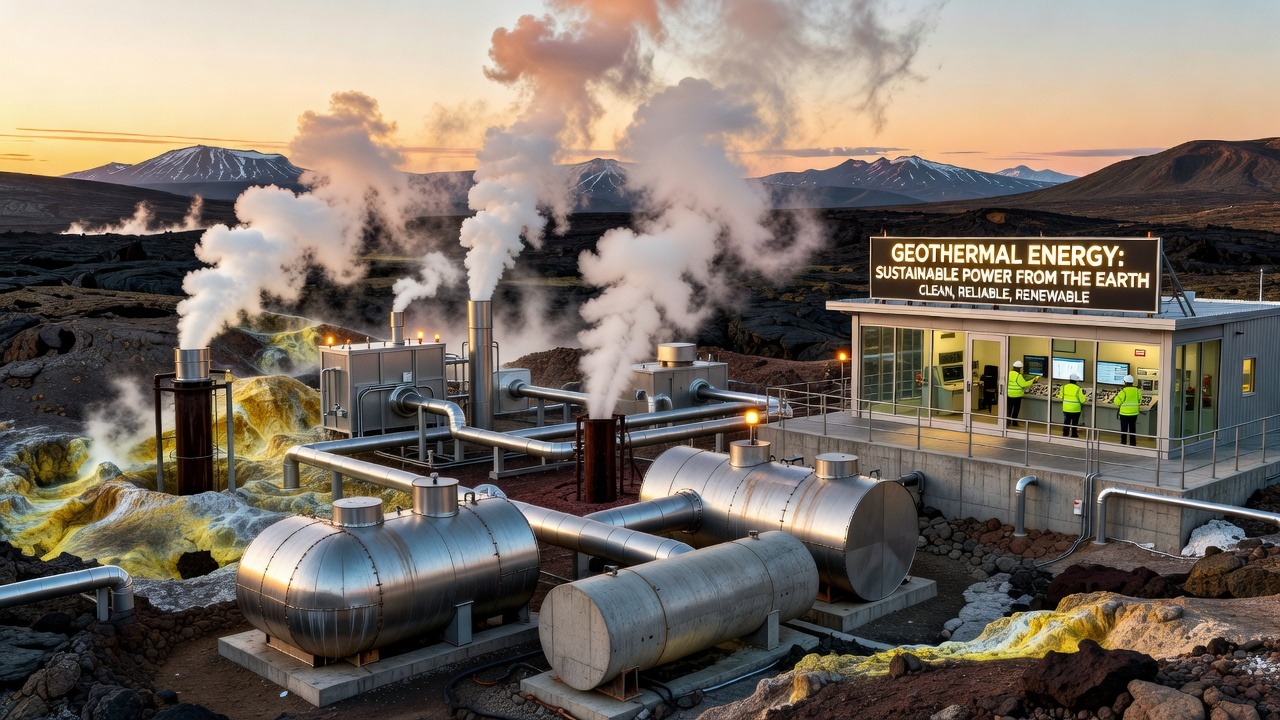

India is stepping up efforts to develop its underutilised geothermal energy resources to establish a reliable, weather-independent, and low-carbon power source that can complement solar and wind energy. Aligning with its 2070 Net Zero emissions target, the Ministry of New and Renewable Energy (MNRE) notified India’s first National Policy on Geothermal Energy in September 2025 to encourage exploration, investment, and direct heat applications. A significant milestone was achieved in July 2026 when the ONGC Energy Centre commissioned two 1,000-metre-deep geothermal wells in Ladakh’s Puga Valley, laying the foundation for the country’s first 1 MW demonstration power project.
Environment Pulse Desk: India is intensifying efforts to unlock its largely underutilised geothermal energy resources, seeking to establish the technology as a reliable, weather-independent and low-carbon source of power that can complement solar and wind generation and support the country’s long-term clean energy transition.
The renewed push comes as India works towards its Net Zero emissions target by 2070 and seeks to diversify its renewable energy portfolio. Unlike solar and wind power, geothermal energy can provide electricity and heat continuously, irrespective of daylight, seasonal variations or weather conditions, giving it potential value as a dependable component of a future low-carbon energy system.
A key policy milestone was achieved in September 2025, when the Ministry of New and Renewable Energy (MNRE) notified India’s first National Policy on Geothermal Energy. The policy provides a framework for systematic exploration, assessment and development of geothermal resources and seeks to encourage investment and technological collaboration in the sector.
The policy also broadens the potential application of geothermal resources beyond conventional electricity generation. It encourages the use of geothermal heat for industrial processes, space heating and cooling, agriculture and district heating. Another area being explored is the repurposing of abandoned or inactive oil and gas wells for geothermal applications, potentially reducing some of the costs and infrastructure requirements associated with new drilling.
One of the most significant developments in India’s geothermal programme came in July 2026, when the ONGC Energy Centre commissioned two geothermal wells in Puga Valley in Ladakh. The wells, each extending to approximately 1,000 metres, are located at an altitude of more than 14,000 feet.
The wells are expected to serve as the foundation for India’s first 1 MW demonstration-scale geothermal power project. The initiative is particularly significant for Ladakh, where harsh climatic conditions, geographical isolation and high dependence on conventional energy sources make reliable clean power especially important.
The Puga project is also being viewed as an important test case for the country’s ability to develop geothermal technology under challenging high-altitude conditions. Successful operation could provide valuable technical experience for future projects in other geothermal regions. India’s geothermal resource base is spread across several geological zones.
The Geological Survey of India (GSI) has mapped 381 hot springs and identified 10 geothermal provinces across the country. These resources are concentrated in areas including the Himalayan belt, Gujarat, the North-East and several other regions with favourable geological characteristics. Earlier assessments have placed India’s theoretical geothermal potential at nearly 10.6 GW across 42 promising sites.
However, estimates vary considerably depending on the methodology used and whether they measure theoretical, technical or economically recoverable resources. Some more recent assessments have indicated substantially higher technical potential for geothermal electricity generation, alongside significant opportunities for direct applications such as industrial heating and cooling.
The government is consequently looking at geothermal energy not simply as a niche electricity source but as a broader source of clean heat and power. Research and development activity is also expanding. MNRE has sanctioned several projects aimed at testing technologies and applications suited to Indian conditions.
Among them are initiatives examining geothermal power generation from retrofitted oil wells in Ankleshwar, Gujarat, as well as hybrid systems combining geothermal resources with solar energy. The concept of combining solar and geothermal technologies could prove particularly useful in improving the overall reliability and efficiency of renewable energy systems.
Solar power can meet daytime electricity demand, while geothermal generation can provide a more stable supply and potentially support operations when solar output falls. Another area receiving attention is the Andaman and Nicobar Islands. The Solar Energy Corporation of India (SECI) has invited expressions of interest for geothermal resource assessment and potential power development in the island territory, with an indicative capacity of 5–20 MW. The initiative reflects the government’s interest in determining whether geothermal resources can contribute to the energy needs of remote and geographically isolated regions.
Such locations can face high costs for transporting conventional fuels, making locally available renewable energy resources particularly attractive. Geothermal energy has several characteristics that distinguish it from other renewable technologies. Once an economically viable geothermal resource is identified and developed, a power plant can potentially operate around the clock with relatively high capacity utilisation.
This makes geothermal power a potential source of firm renewable electricity rather than an intermittent source dependent on weather conditions. Its role could therefore complement India’s rapidly expanding solar and wind capacity. As the share of variable renewable energy increases, the power system will require a combination of storage, flexible generation, transmission infrastructure and other sources capable of providing dependable electricity. However, geothermal development also presents significant challenges. The first is resource exploration risk. Determining whether a geothermal reservoir has sufficient temperature, pressure, permeability and long-term sustainability for commercial development can require substantial investment before a project begins generating revenue.
Drilling is another major cost factor. Deep drilling requires specialised equipment, geological knowledge and advanced technologies, and the risks are particularly significant in difficult terrains such as the Himalayas. India’s ability to develop indigenous drilling technologies and improve resource assessment techniques will therefore be critical to reducing project costs. Officials and industry experts also recognise the need for clear regulatory mechanisms governing geothermal exploration, drilling, land use, water management and environmental safeguards.
A predictable regulatory framework could make it easier for private companies and financial institutions to evaluate and invest in geothermal projects. The government is exploring mechanisms to encourage greater private-sector participation. Potential measures include viability gap funding, tax incentives, concessional financing and technology partnerships. Such support could be particularly important during the early stages of market development, when project costs remain high and commercial experience is limited.
International cooperation is another component of India’s strategy. The country is exploring partnerships with geothermal-experienced nations, including Iceland, Australia and Saudi Arabia, to access technological expertise, resource assessment capabilities and investment opportunities. For India, the development of geothermal energy also fits into a broader strategy of reducing dependence on fossil fuels while strengthening domestic energy security. Geothermal resources, where commercially viable, can provide locally generated energy without the fuel transportation requirements associated with coal, oil or gas.
The potential applications extend beyond electricity. Geothermal heat can be used directly in industrial processes, greenhouse agriculture, food processing, district heating and cooling systems. In suitable locations, such applications may prove economically attractive even where electricity generation is not viable. This distinction could be important for India’s geothermal strategy. Not every hot spring or geothermal reservoir will necessarily support a commercial power plant, but lower-temperature resources could still have value through direct heat applications.
The country’s first geothermal policy and the development of demonstration projects mark a shift from resource identification towards practical deployment. The immediate objective is likely to establish technical and commercial experience, identify the most promising sites and determine which technologies can work efficiently under Indian geological and climatic conditions. The Puga Valley project, in particular, could become a benchmark for future developments. If the demonstration succeeds, it could strengthen the case for additional exploration and help Indian institutions build expertise in geothermal drilling, reservoir management and power generation.
As India expands its renewable energy capacity, geothermal power is unlikely to replace solar or wind. Instead, its strategic value lies in its ability to complement intermittent renewable sources with dependable low-carbon generation and direct heat applications.
The next phase will depend on how effectively India can manage exploration risks, lower drilling costs, develop domestic technologies and create commercially viable projects. Success could turn geothermal energy from a largely untapped geological resource into a useful component of India’s future energy mix. With hundreds of identified hot springs, multiple geothermal provinces and several demonstration and assessment initiatives now underway, India is beginning to move geothermal energy from the margins of its renewable energy strategy towards a more prominent role in energy security, industrial decarbonisation and the Net Zero 2070 pathway.
Also Read: रिकॉर्ड गर्मी के बीच इटली में एयर कंडीशनिंग की मांग बढ़ी, बिजली खपत ने भी बनाए नए रिकॉर्ड